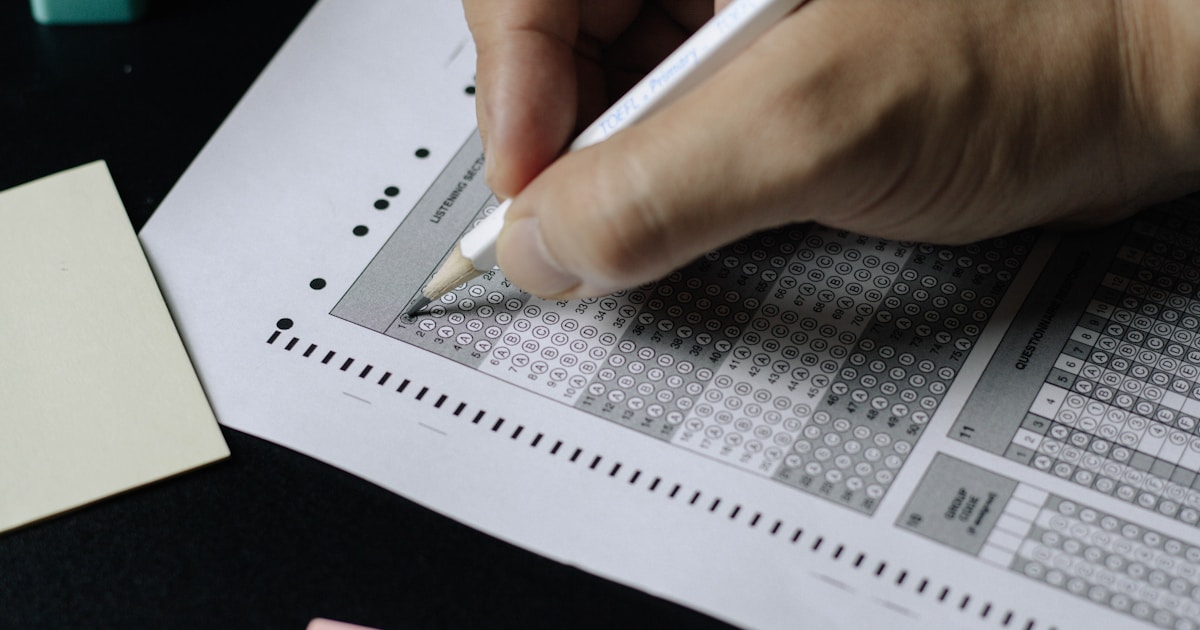
Vote counting happens at each of Kenya's 46,000+ polling stations immediately after closing — and only agents with 48-hour appointment letters can witness it. Understanding the counting process is essential for any agent tasked with protecting their candidate's votes.
The ORPP Agents Quick Guide (June 2022) published by the Office of the Registrar of Political Parties sets out the complete counting procedure. This article walks through every stage, from venue arrangement to electronic results transmission.
Who Can Attend the Count?
Only agents who hold a valid 48-hour appointment letter — issued by their political party or candidate no later than 48 hours before election day — are permitted to attend the counting. This letter must be presented to the Presiding Officer (PO). Agents without this letter may be denied entry to the counting area.
In addition to agents, accredited election observers, IEBC staff, and security personnel are present. Unauthorized persons are excluded.
Venue Rearrangement for Counting
After voting closes and before counting begins, the polling station is rearranged to create a proper counting environment. The standard layout is:
| Position | Location |
|---|---|
| Presiding Officer (PO) | Front of the room, facing all participants |
| Deputy Presiding Officer (DPO) | One side of the PO, assisting with the process |
| Clerks | At the counting table, handling ballots |
| Agents | Seated facing the counting table — must have clear line of sight |
| Observers | Behind the agents, observing the overall process |
Agents should ensure they can clearly see the counting table and every ballot being sorted. If the seating arrangement does not provide adequate visibility, agents have the right to request rearrangement before counting begins.
The Sorting Order
Ballots are sorted and counted in a specific order, starting with the highest office:
- President
- Member of the National Assembly (MNA)
- Member of the County Assembly (MCA)
- Senator
- County Woman Member of the National Assembly (CWMNA)
- Governor
This order ensures that the presidential count — which draws the most attention and scrutiny — is completed first while agents and officials are freshest.
The Counting Process: Step by Step
Step 1: Open One Ballot Box at a Time
The PO opens one ballot box at a time, starting with the presidential ballot box. Before opening, the PO displays the box's seals — both IEBC and agent seals — to confirm they are intact. If any seal is broken or missing, agents should immediately object and record the fact.
Step 2: Unfold and Sort by Position
The contents of each box are emptied onto the counting table. Clerks unfold each ballot paper and sort them by elective position. Any ballot from a different position found in the wrong box is set aside and sorted to the correct pile.
Step 3: Place Ballots at Candidate Spots
For each position, the counting table is arranged with designated spots for each candidate. Clerks read each ballot and place it at the appropriate candidate's spot. A separate spot is designated for rejected ballots. Agents should watch every placement — this is where counting accuracy is determined.
Step 4: Count Each Candidate's Ballots
Once all ballots for a position have been sorted, the clerks count the pile for each candidate. The count is done openly, with agents able to observe. Ballots are typically counted in bundles of 25 or 50 for accuracy.
Step 5: Recount (If Requested)
An agent may request one recount per position. This is a critical right. If the agent's own tally does not match the PO's announced count, the agent should request a recount before the result is recorded on the statutory form. Once the form is completed and signed, a recount becomes much more difficult to obtain.
Important: Only one recount per position is permitted. Multiple recount requests for the same position can be refused by the PO.
Step 6: Record Results on Statutory Forms
The PO records the results for each position on the statutory result form. Each position has its own form: Form 34A (President), Form 35A (MNA), Form 36A (Senator), Form 37A (CWMNA), Form 38A (Governor), Form 39A (MCA). The form captures:
- Station name and code
- Total registered voters
- Total votes cast
- Votes per candidate
- Total rejected ballots
- Total disputed ballots
- Total valid votes
Step 7: PO Announces Results
The PO verbally announces the results for each position to all present — agents, observers, and security. This announcement is the official declaration at the polling station level.
Step 8: Results Transmitted Electronically via KIEMS
Immediately after the results are recorded and announced, the PO uses the KIEMS kit to transmit the results electronically to the IEBC national tallying centre. The statutory form is photographed using the KIEMS device, and the image is transmitted alongside the numerical data.
This electronic transmission is what produces the results that appear on the IEBC portal in real time. The physical forms are then transported to the constituency tallying centre for verification.
What Makes a Good Count
A well-managed count has these characteristics:
- Visibility — every agent can see every ballot being sorted and counted
- Transparency — the PO explains each step and responds to agent questions
- Accuracy — ballot paper reconciliation balances, and candidate tallies match the total valid votes
- Documentation — every number is recorded on statutory forms, and agents receive copies
- Speed without haste — the count proceeds efficiently but not so fast that accuracy is sacrificed
For agents using Votrack, the parallel vote tallying feature allows agents to submit their own counts in real time — candidate by candidate, position by position. When thousands of agents across the country submit their tallies simultaneously, the platform produces a parallel result that can be compared against the official IEBC transmission.
CTA: Give your agents the tools to track every vote during counting. Request a Votrack demo and see parallel vote tallying in action.
Share this article
Need Real-Time Election Tracking?
Votrack provides secure, parallel vote tallying for every electoral position in Kenya.
Learn More About Votrack