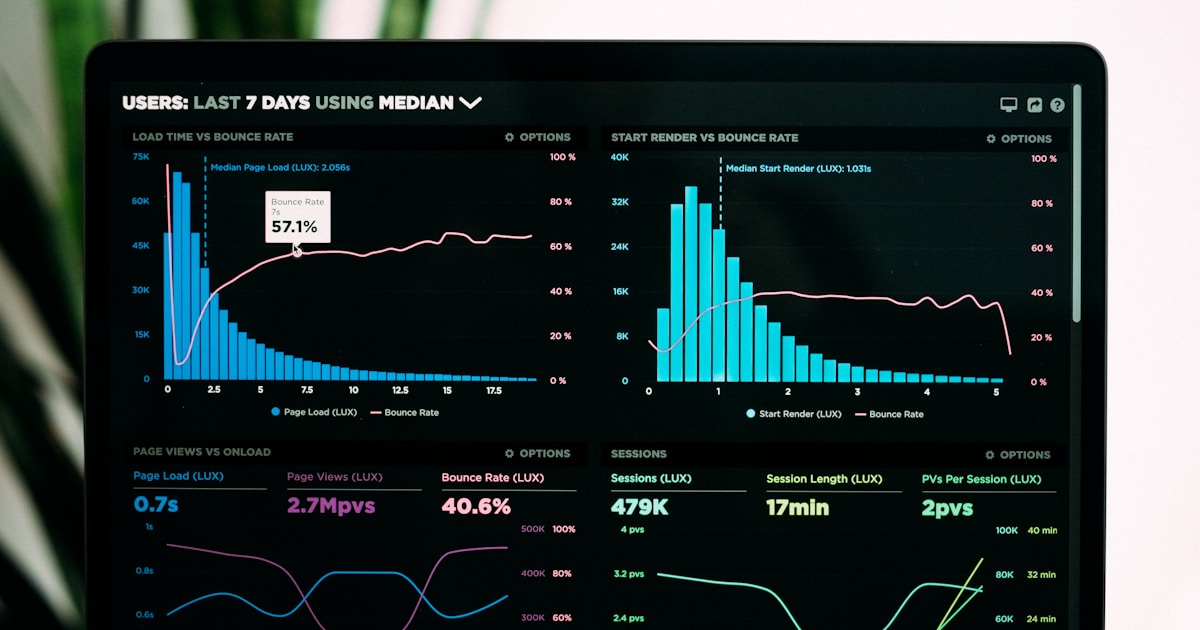
Kenyans made over 380 million requests to the IEBC results portal. The hunger for election transparency has never been higher.
At some point during the week of August 9, 2022, something remarkable happened in Kenya. Millions of citizens, armed with smartphones and laptops, started refreshing a single website: forms.iebc.or.ke. They were watching democracy happen in real time — one Form 34A at a time.
By the time the dust settled, that portal had received 380 million requests. To put that in context, Kenya's entire population is about 54 million. That works out to roughly 7 page loads per person — including babies, the elderly, and the millions without internet access. In reality, a core group of politically engaged Kenyans were refreshing that portal obsessively.
What the Portal Actually Showed
Unlike previous elections where Kenyans waited for verbal announcements from the IEBC, the 2022 portal displayed scanned copies of the actual Form 34A — the official presidential results declaration form from each polling station. For the first time, anyone with internet access could see the handwritten results from their local polling station before the national tally was complete.
The Results Transmission System (RTS), a component of the KIEMS technology, transmitted results from all 46,229 polling stations at a 100% attainment rate. The Carter Center noted that 97.71% of polling station results scans had been posted on the public portal less than 24 hours after polls closed.
This was a massive improvement over 2017, when the IEBC transmitted images rather than completed forms, and the process was dogged by allegations of system manipulation that led to the Supreme Court nullification of the presidential result.
The Technology Behind the Portal
Making this work required an enormous technology deployment. The IEBC fielded 55,200 KIEMS kits across the country — up from 45,000 in 2017. Each kit had three integrated modules: Electronic Voter Verification (EVV) for authenticating voters using biometrics, Electronic Voter Identification (EVI) for identifying voters, and the Results Transmission System (RTS) for sending completed forms to the central server.
Network coverage was critical. The IEBC secured agreements with all three mobile network operators. Safaricom covered 96% of polling centres. Airtel covered 75%. Telkom Kenya covered 62%. For the remaining 1,111 polling centres without 3G or 4G coverage, the IEBC deployed satellite technology.
The IEBC also expanded its Wide Area Network to 30 additional county offices that had not been connected in 2017, ensuring all 47 counties had reliable connectivity to the central data centre.
The Simulation That Saved the Election
The IEBC did not just hope the system would work on election day. They ran two simulation exercises beforehand. Phase 1 deployed 2,906 KIEMS kits and achieved an 87.61% transmission success rate — 2,546 kits successfully transmitted while 360 failed. The IEBC identified and fixed the issues. Phase 2, using 580 kits in selected stations, achieved 100% success.
This two-phase approach proved critical. The lessons learned between Phase 1's 87.61% and Phase 2's 100% gave the IEBC confidence that election day would work. And it did — all 46,229 forms were transmitted successfully.
How the Data Flowed: From Polling Station to Your Phone
Here is the journey of a single result:
- The Presiding Officer at a polling station completes Form 34A by hand, recording votes for each candidate
- The form is photographed using the KIEMS kit's camera
- The image is transmitted via mobile network (or satellite) to the IEBC's central server
- The server processes and publishes the image to forms.iebc.or.ke
- A Kenyan citizen in Nairobi, Mombasa, or the diaspora opens the portal and sees the handwritten result from a specific polling station
Multiply that by 46,229 and you get the scale of the operation. The data centre infrastructure had been upgraded specifically to handle this load — and handle it did, processing those 380 million public requests without significant downtime.
What the Traffic Tells Us About Kenya
The 380 million requests reveal something important about Kenyan democracy in 2022. Despite turnout dropping to 65%, public interest in the results was enormous. People who did not vote still wanted to know the outcome. People who did vote wanted proof that their vote was counted correctly.
This tension — between declining participation and increasing scrutiny — is the defining feature of modern Kenyan elections. Technology has made the process more transparent than ever. But transparency alone does not motivate people to queue for hours at a polling station. See our analysis of the great turnout decline for more on why voters stayed home.
The Challenges That Remain
The system was not perfect. The Carter Center identified cybersecurity vulnerabilities, though none were found to have affected the outcome. The IEBC lacked a cyber-security forensic lab for extracting and preserving electronic evidence for court proceedings. And the BVR technology used for voter registration, acquired back in 2012, was increasingly obsolete with faulty screens, hard drives, and cameras.
For 2027, the IEBC has recommended migrating from BVR kits to KIEMS tablets for voter registration, achieving 100% 3G coverage nationwide to eliminate satellite dependency, and establishing a forensic lab for court-admissible electronic evidence. Whether these recommendations are funded and implemented will determine if the next election's technology matches the public's appetite for transparency.
380 million requests proved that Kenyans demand transparency. Votrack delivers it — with real-time dashboards that track every result from every polling station across all 47 counties. Request a demo and see what 46,229 polling stations look like on one screen.
Share this article
Need Real-Time Election Tracking?
Votrack provides secure, parallel vote tallying for every electoral position in Kenya.
Learn More About Votrack