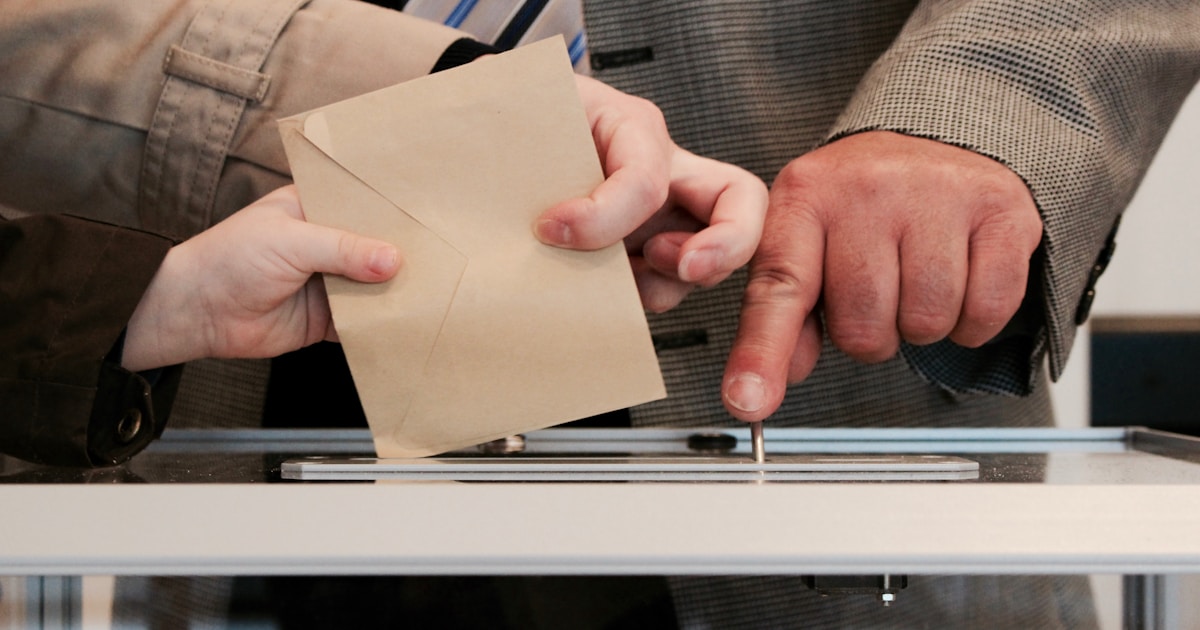
Every ballot paper found in a ballot box during counting must be classified into one of five categories — and agents have specific rights at each decision point. Understanding ballot classification is one of the most important skills an agent can have.
The ORPP Agents Quick Guide (June 2022) published by the Office of the Registrar of Political Parties outlines the criteria for each ballot category. In closely contested elections, the classification of even a small number of ballots can change the outcome.
The Five Ballot Categories
1. Valid Ballots
A ballot is classified as valid when it clearly indicates the voter's choice for one candidate. The law is deliberately broad about what constitutes a valid mark:
- Cross (X) — placed in or near the candidate's box
- Tick (✓) — placed in or near the candidate's box
- Thumbprint — pressed in the candidate's box
- Any other mark that clearly indicates the voter's intended choice
The key legal test is voter intention. If the mark, however imperfect, clearly shows which candidate the voter wanted, the ballot is valid. A circle around a candidate's name, an underline, or even a smiley face next to one candidate — all can be valid if the intention is clear.
2. Rejected Ballots
The Presiding Officer (PO) rejects a ballot when it meets any of the following criteria:
| Rejection Ground | Description |
|---|---|
| Wrong serial number | The serial number does not match those issued at that station |
| Wrong size or colour | The paper size or colour does not match the official ballot for that position |
| Wrong candidates listed | The ballot lists candidates from a different constituency or ward |
| No IEBC stamp | The ballot does not bear the official IEBC date stamp (front or back) |
| No serial number | The serial number has been removed or is missing |
| Unmarked ballot | The ballot has no mark whatsoever — completely blank |
| Marked for multiple candidates | The voter marked more than one candidate for the same position |
| Voter identity revealed | The voter wrote their name, ID number, or other identifying information on the ballot |
| Unclear voter choice | The mark does not clearly indicate which candidate was chosen |
When the PO rejects a ballot, they stamp it with the word "REJECTED" and place it in the rejected ballots pile. The total number of rejected ballots is recorded on the statutory result form.
3. Rejection Objected To
This is one of the most important agent rights during counting. If an agent believes the PO has wrongly rejected a ballot — for example, the agent believes the voter's intention was clear despite an imperfect mark — the agent can formally object to the rejection.
The procedure is:
- Agent verbally objects to the PO's rejection decision
- The PO stamps the ballot with "REJECTION OBJECTED TO"
- The ballot is set aside in a separate category
- The ballot is not counted as a valid vote at the polling station level
- However, the ballot is preserved and can be reviewed by a court in the event of an election petition
This is critical: objected-to ballots travel with the statutory forms to the tallying centre and can be re-examined by a judge. In tight races, these ballots have changed outcomes during petitions.
4. Disputed Ballots
A disputed ballot arises when the situation is reversed: the PO considers a ballot valid, but an agent questions its validity. The agent believes the ballot should be rejected — perhaps because the mark is ambiguous or the ballot appears tampered with.
The procedure is:
- Agent raises a dispute about a ballot the PO has accepted as valid
- The PO stamps the ballot with "DISPUTED"
- The PO makes the final decision — if the PO still considers it valid, it is counted as a valid vote for the relevant candidate
- However, the "DISPUTED" stamp means the ballot is flagged and can be re-examined during a petition
The key difference from "rejection objected to" is that disputed ballots are counted in the valid votes tally, while objected-to rejections are not counted. In both cases, the ballots are preserved for potential judicial review.
5. Spoiled Ballots (Found in Box)
Occasionally, ballots found inside the ballot box during counting are damaged, defaced, or physically deteriorated to the point where they cannot be classified. These are categorised as spoiled ballots found in the box — distinct from "spoilt ballots" which are those returned by voters during voting and stamped "SPOILT" before being placed in a separate envelope.
Ballot Classification Decision Flow
The following summarises the decision logic the PO applies to each ballot during counting:
| Question | Yes | No |
|---|---|---|
| Does the ballot have proper serial number, size, colour, IEBC stamp? | Proceed to next check | REJECTED |
| Is the ballot marked for exactly one candidate? | Proceed to next check | REJECTED (blank or multiple marks) |
| Does the mark clearly indicate voter's choice? | VALID (unless agent disputes) | REJECTED (unclear intention) |
| Does the voter reveal their identity on the ballot? | REJECTED | Does not affect validity |
Agent Rights During Classification
| Situation | Agent Right | Stamp Applied | Counted? |
|---|---|---|---|
| PO rejects a ballot the agent thinks is valid | Object to the rejection | "REJECTION OBJECTED TO" | No (but preserved for petition) |
| PO accepts a ballot the agent thinks is invalid | Dispute the ballot | "DISPUTED" | Yes (PO's decision stands, but flagged) |
| Agent disagrees with candidate attribution | Object and request review | — | PO re-examines and decides |
Why Ballot Classification Matters
In the 2017 and 2022 Kenyan elections, rejected ballots numbered in the hundreds of thousands nationally. In constituency-level races, margins of victory were sometimes smaller than the number of rejected ballots. This means that how ballots are classified can literally determine who wins.
Agents who understand the five categories — and who actively exercise their rights to object and dispute — provide a critical check on the Presiding Officer's decisions. Every objection and dispute is preserved in the official record and can be raised during a petition.
With Votrack, agents can record the number of ballots in each category in real time and flag stations where rejected ballot counts seem unusually high. When aggregated across thousands of stations, this data reveals patterns that may indicate systematic issues.
CTA: Rejected ballots can change elections. Ensure your agents know how to classify and challenge. Request a Votrack demo and track ballot classification across every station.
Share this article
Need Real-Time Election Tracking?
Votrack provides secure, parallel vote tallying for every electoral position in Kenya.
Learn More About Votrack