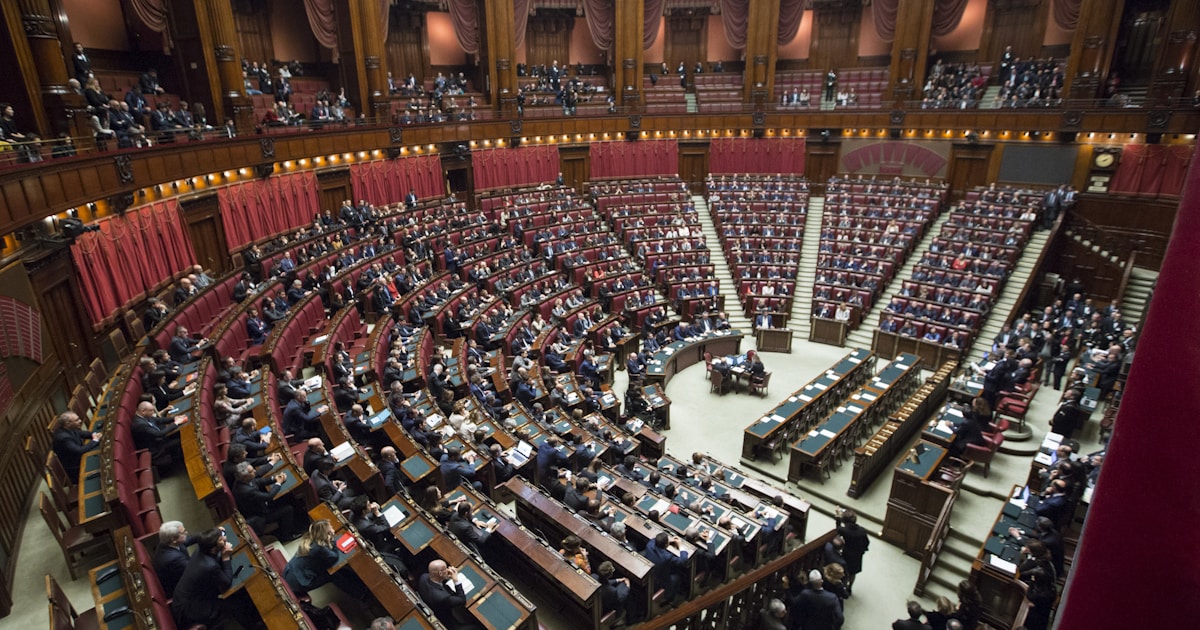
2013 was Kenya's first election with counties, county assemblies, and 6 different ballots. It was the most complex democratic exercise in Kenyan history.
On March 4, 2013, Kenya went to the polls under a brand-new constitutional framework. The 2010 Constitution had created an entirely new system of government: 47 counties with elected governors and county assemblies, a Senate, Women Representatives, and a reformed National Assembly. Every one of these positions was contested for the first time on the same day.
The numbers were staggering. 14,388,781 registered voters. 24,563 polling stations. Six ballot papers per voter. Thousands of candidates. This article is a comprehensive data overview of what happened.
The Scale of 2013
The 2013 election filled 1,882 elected seats across six tiers of government:
| Position | Seats | Valid Votes | Drop from Presidential |
|---|---|---|---|
| President | 1 | 12,221,053 | — |
| Member of National Assembly | 290 | 12,194,562 | -26,491 |
| Governor | 47 | 12,162,733 | -58,320 |
| Senator | 47 | 12,131,294 | -89,759 |
| Women Representative | 47 | 12,101,568 | -119,485 |
| County Assembly (MCA) | 1,450 | 12,057,023 | -164,030 |
| Total | 1,882 | ||
The presidential race was the tightest. Uhuru Kenyatta won with 6,173,433 votes (50.07%), clearing the 50%+1 threshold by just 8,418 votes. Raila Odinga received 5,340,546 (43.31%). The result was challenged in the Supreme Court (Petition No. 5 of 2013) but upheld unanimously.
Voter Registration and Turnout
The IEBC registered 14,388,781 voters — 14,352,545 through biometric registration and 36,236 through non-biometric methods. Out of an estimated voting-age population of 18 million, this represented an 80% registration rate.
Turnout on election day was 86% — 12,330,028 people voted. This was one of the highest turnout rates in Kenya's multi-party history.
Regional turnout varied significantly:
Central Kenya led with 92% turnout, driven by Uhuru Kenyatta's candidacy. Nyanza (89%) and Rift Valley (88%) also posted strong numbers. Coast had the lowest turnout at 70%, followed by Nairobi at 81%.
At the county level, the highest turnout was in Homa Bay (94%), Nyandarua (93%), Nyeri (93%), and Murang'a (93%). The lowest was in Mombasa (66%) and Kilifi (65%).
Track Turnout in Real Time
Votrack monitors voter turnout across all 24,000+ polling stations. Know your numbers before the final tally.
Request a DemoParty Strength: A Fragmented Parliament
The 2013 election produced a fragmented parliament. No single party won a majority of MP seats. The top three parties were:
- Orange Democratic Movement (ODM): 78 MP seats, 16 Governor seats, 11 Senate seats
- The National Alliance (TNA): 72 MP seats, 8 Governor seats, 11 Senate seats
- United Republican Party (URP): 62 MP seats, 10 Governor seats, 9 Senate seats
TNA and URP formed the Jubilee Coalition, which together controlled 134 of 290 MP seats. ODM and its allies in the CORD coalition held a comparable bloc. A total of 21 different political parties won at least one MP seat.
At the Governor level, 13 different parties won gubernatorial seats — showing even greater fragmentation. ODM led with 16 out of 47 governorships.
For Women Representatives, only 5 parties won seats: ODM (15), TNA (14), URP (10), Wiper (6), and New FORD-K (2).
The Polling Infrastructure
Running an election of this scale required massive logistics. The IEBC set up 24,563 polling stations with 31,983 streams across all 47 counties. Nairobi alone had 2,228 streams despite having only 330 physical polling stations — reflecting the city's high voter density.
The largest counties by polling infrastructure:
| County | Polling Stations | Streams | Registered Voters |
|---|---|---|---|
| Kitui | 1,318 | 1,345 | 324,798 |
| Meru | 951 | 1,102 | 489,590 |
| Kakamega | 904 | 1,153 | 568,151 |
| Nakuru | 899 | 1,352 | 696,594 |
| Makueni | 862 | 914 | 298,474 |
| Machakos | 875 | 1,059 | 445,421 |
| Nairobi | 330 | 2,228 | 1,732,288 |
Technology: The First Biometric Election
2013 was also Kenya's first attempt at using biometric technology for voter registration and identification. The IEBC deployed Biometric Voter Registration (BVR) kits across the country, registering 14,352,545 voters biometrically.
However, the technology had problems on election day. The Electronic Voter Identification Devices (EVIDs) failed in many polling stations, forcing the IEBC to resort to manual voter identification using printed registers. This technology failure became a central issue in the presidential petition.
Despite the challenges, the 2013 election established the principle that Kenyan elections should use technology. This set the stage for the more advanced KIEMS kits introduced in 2017.
The Presidential Petition
Raila Odinga challenged Kenyatta's election in the Supreme Court. The consolidated petition (Petition No. 5 of 2013, together with Nos. 3 and 4) raised several issues:
- Whether the election was conducted in compliance with the Constitution
- Whether Kenyatta and Ruto were validly elected
- Whether rejected ballots should be included in the total when calculating 50%+1
On March 30, 2013, the Supreme Court ruled unanimously to dismiss the petition. The six justices — led by Chief Justice Willy Mutunga — found that the elections were conducted in compliance with the law, the winners were validly elected, and rejected ballots should not be counted in the denominator.
Legacy of the 2013 Election
The 2013 election was a watershed moment for Kenya's democracy:
- Devolution began. For the first time, 47 counties had elected governments with real budgets and powers.
- The six-ballot format was tested. Voter fatigue caused a down-ballot drop-off of 164,030 votes between presidential and MCA ballots.
- The 50%+1 rule was nearly tested to its limit. Kenyatta's 0.07% margin above the threshold came closer to triggering a runoff than any subsequent election.
- Technology was introduced — and failed. The BVR and EVID experience shaped how Kenya approached election technology in 2017 and 2022.
- A fragmented party system emerged. With 21 parties winning MP seats, Kenya moved further from the two-party model.
For a deep dive into the presidential numbers, read Kenyatta Won by 0.07% Above the 50%+1 Threshold. For the down-ballot pattern, see The Down-Ballot Drop-Off. And for the tightest constituency races, check out The Closest MP Race in 2013.
Built for Kenya's Electoral Complexity
Votrack was designed for elections exactly like 2013: multiple positions, thousands of polling stations, and millions of votes. Track all six positions from a single dashboard.
Get Started with VotrackWhat This Pattern Means for 2027
Historical election numbers are most useful when they are turned into field actions. For The 2013 Election: Kenya's First Under the 2010 Constitution, your campaign can use this history to decide where to invest agents, transport, and voter mobilisation before election day.
- Set target turnout by ward: Use past turnout as your baseline, then assign a realistic uplift target for each ward and polling centre.
- Track strongholds hour by hour: If turnout in your core areas is below plan by midday, deploy rapid mobilisation teams early, not late.
- Protect evidence quality: Keep a clean chain of results forms, incident notes, and station-level logs to support legal review if needed.
For primary reference material, review the IEBC official resources, Kenya Law election jurisprudence, and the IEBC election regulations.
CTA: Votrack gives your team real-time visibility from polling station to county tally, with Web, USSD, and Telegram reporting in one workflow. Book a Votrack demo.
Share this article
Need Real-Time Election Tracking?
Votrack provides secure, parallel vote tallying for every electoral position in Kenya.
Learn More About Votrack