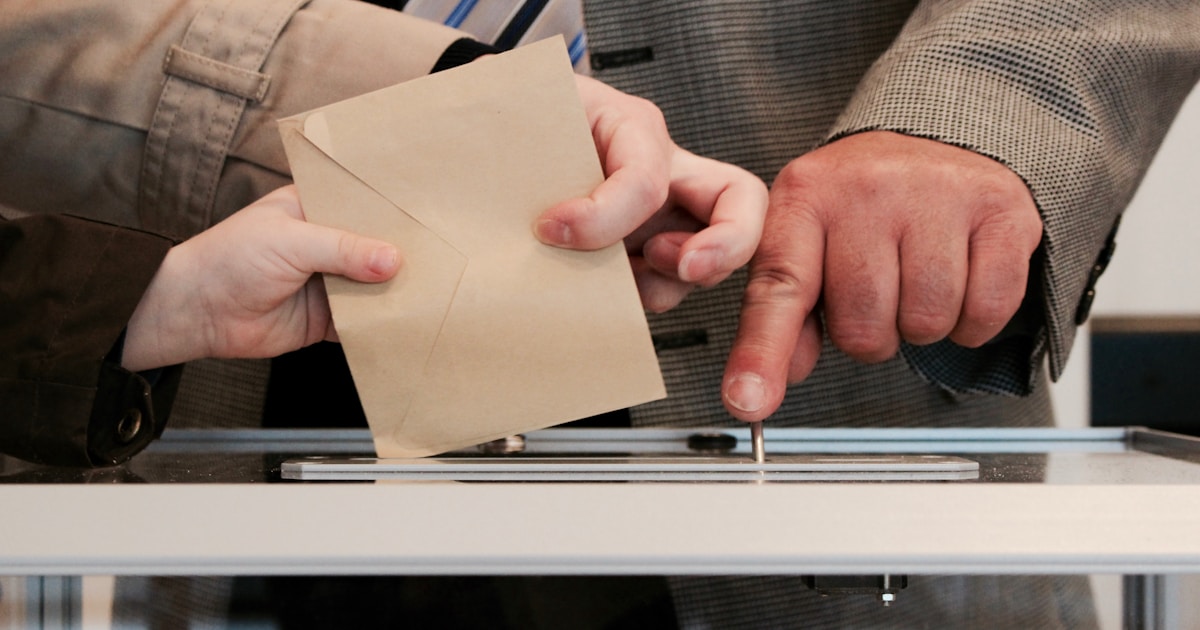
Every Kenyan voter passes through nine distinct steps at the polling station — and every step is a checkpoint where agents must be vigilant. Understanding this process is essential for voters, agents, and observers alike.
The Office of the Registrar of Political Parties (ORPP) published the Agents Quick Guide (June 2022), which lays out the standard voting procedure at every polling station in Kenya. This guide is the authoritative reference for party agents, and the nine-step process it describes is the backbone of election-day operations across Kenya's 46,000+ polling stations.
The Nine Steps: From Queue to Exit
Step 1: Voter Joins the Queue
The process begins when a voter arrives at the polling station and joins the queue. Clerk 1 is responsible for managing the queue and ensuring an orderly flow of voters into the station. Voters must queue in an orderly manner, and the clerk controls the pace at which voters enter the polling room. Agents should watch for any attempt to jump the queue or for any voter being turned away without reason.
Step 2: ID Verification Against the Printed Register
Clerk 2 checks the voter's identification document — either a national ID card or a valid Kenyan passport — against the printed register of voters for that specific polling station. The voter's name, ID number, and details must match what appears in the register. Agents should ensure that no one is allowed to vote if their name does not appear on the printed register, and that no legitimate voter is wrongly turned away.
Step 3: Biometric Verification Using KIEMS Kit
Clerk 3 uses the Kenya Integrated Election Management System (KIEMS) kit to perform biometric verification of the voter's identity. The voter places their finger on the KIEMS device for fingerprint matching. This electronic check confirms that the person presenting the ID is indeed the registered voter. Agents should note any cases where biometric verification fails and observe how the Presiding Officer handles such situations — the voter may still be allowed to vote through manual verification if their details match the printed register.
Step 4: Voter's Name Called Out Loud
Once verified, the voter's name is called out loud by the clerk. This public announcement serves a critical purpose: it allows all agents present to hear and verify who is voting. Any agent who believes the person is not the registered voter can raise an objection at this point. This is one of the most important transparency mechanisms in the process.
Step 5: Ballot Papers Issued and Stamped
Clerk 4 issues the voter all six ballot papers — one for each elective position: President, Governor, Senator, County Woman Member of the National Assembly, Member of the National Assembly, and Member of the County Assembly. Each ballot paper is stamped on the front with the official IEBC date stamp before being handed to the voter. A ballot paper without this stamp will be rejected during counting. Agents should verify that every ballot issued carries the stamp.
Step 6: Ballot Papers Stamped on Reverse
Each ballot paper is also stamped on the reverse side. This double-stamping (front and back) is a security feature that helps authenticate ballots during counting. Any ballot found during counting without stamps on both sides is grounds for rejection.
Step 7: Voter Enters Polling Booth and Marks Ballots
The voter enters the polling booth — a screened area that ensures ballot secrecy. Inside, the voter marks their choice on each of the six ballot papers. A valid mark can be a tick, cross, thumbprint, or any mark that clearly indicates the voter's preferred candidate. No one — including agents, clerks, or observers — may enter the booth while a voter is marking their ballots. If a voter spends an unusually long time in the booth, the Presiding Officer may check on them, but must not look at the marked ballots.
Step 8: Indelible Ink Applied
Clerk 5 applies indelible ink to the voter's left small finger (little finger). This ink, which cannot be easily washed off, serves as a visible indicator that a person has already voted, preventing double voting. Agents should ensure that every voter is inked and should watch for any voter whose finger already shows ink traces — a potential sign of double voting.
Step 9: Voter Deposits Ballots and Exits
Finally, the voter deposits each ballot paper into the correct colour-coded ballot box. Each of the six positions has its own distinctly coloured box. The voter must place the right ballot in the right box. After depositing all six ballots, the voter exits the polling station. Agents should watch for any voter attempting to leave with a ballot paper or depositing ballots in the wrong box.
What Agents Should Monitor at Each Step
| Step | Responsible Clerk | Agent Watch Points |
|---|---|---|
| 1. Queue | Clerk 1 | Orderly flow, no queue-jumping, no voters turned away without cause |
| 2. ID Check | Clerk 2 | ID matches printed register, no impersonation |
| 3. KIEMS Biometric | Clerk 3 | Fingerprint match, handling of failed biometrics |
| 4. Name Called | Clerk | Name announced clearly, opportunity to object |
| 5. Ballots Issued | Clerk 4 | All 6 ballots issued, IEBC date stamp on front |
| 6. Reverse Stamp | Clerk 4 | Stamp on reverse of each ballot |
| 7. Polling Booth | — | Secrecy maintained, no one enters booth with voter |
| 8. Indelible Ink | Clerk 5 | Ink applied to left small finger, check for pre-existing ink |
| 9. Ballot Deposit | — | Correct box for each ballot, no ballots taken outside |
Why the Nine Steps Matter
This nine-step process is not merely procedural — it is the architecture of electoral integrity. Each step is a checkpoint designed to prevent fraud, ensure voter identity, maintain ballot secrecy, and create an auditable trail. When agents understand every step, they are better equipped to detect irregularities in real time rather than after the fact.
For party agents using Votrack, recording observations at each step — through the agent submission feature — provides a parallel record that can be compared against official station diaries. If a dispute arises, having documented each stage of the process creates an evidence base that can be used in election petitions.
CTA: Equip your agents with the knowledge and tools to monitor every step of the voting process. Request a Votrack demo and see how real-time agent reporting transforms election-day oversight.
Share this article
Need Real-Time Election Tracking?
Votrack provides secure, parallel vote tallying for every electoral position in Kenya.
Learn More About Votrack