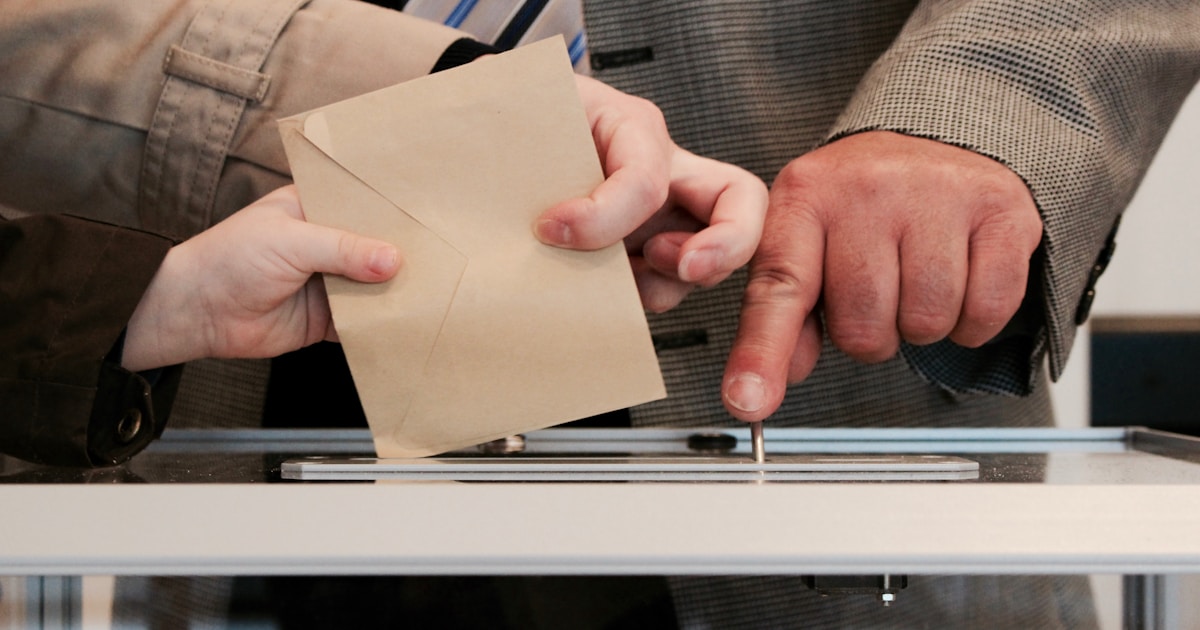
The opening procedure at a Kenyan polling station is not a ceremonial formality. It is the single most important verification moment of the entire election day. Everything that follows, from the first vote to the final count, rests on the integrity established during the opening. A compromised opening can invalidate an entire station's results.
This article is based on the ORPP Agents Quick Guide (June 2022), published by the Office of the Registrar of Political Parties, which details the opening procedures that agents must observe and verify before voting begins.
Procedure 1: Station Opens at 6:00 AM
The polling station is scheduled to open at 6:00 AM. The Presiding Officer announces the opening and the station diary records the exact time. If the station opens late, the delay and its reason must be documented.
What Agents Should Verify
- Record the exact time of opening: Note whether the station opens at 6:00 AM or later. Even a 15-minute delay can affect turnout at a busy station.
- Document the reason for any delay: Missing materials? PO arrived late? Security not yet in place? Record the specific cause.
- Report late openings immediately: Contact the Constituency Chief Agent to report any delay. Late openings are tracked across constituencies and can become evidence of systemic problems.
Procedure 2: Presiding Officer Verifies All Agents' Accreditation
Before the opening procedures begin, the Presiding Officer checks every agent's credentials. Each agent must present:
- Valid national ID card or passport
- Appointment letter from their candidate or political party
- IEBC-issued serialized accreditation badge
The PO records the names of all accredited agents present in the station diary. Any agent without proper credentials is denied entry. The Oath of Secrecy (Form 32) is signed at this stage.
What Agents Should Verify
- Ensure your own documents are in order: Arrive with all three items (ID, letter, badge) plus the signed Form 32.
- Note which candidates/parties have agents present: If a major candidate has no agent at the station, this is worth noting. Unobserved stations are more vulnerable to irregularities.
- Verify the PO's identity: The PO should identify themselves and present their IEBC appointment credentials.
Procedure 3: Display Empty Ballot Boxes
This is the most visible and dramatic part of the opening ceremony. The Presiding Officer must open and display the interior of every ballot box to all agents, observers, and any members of the public who may be watching. All six colour-coded boxes must be shown to be completely empty:
| Ballot Box | Colour | Position |
|---|---|---|
| Box 1 | White | President |
| Box 2 | Yellow | Senator |
| Box 3 | Purple | County Woman MNA |
| Box 4 | Green | Member of National Assembly |
| Box 5 | Blue | Governor |
| Box 6 | Beige | Member of County Assembly |
What Agents Should Verify
- Visually confirm each box is empty: Do not just take the PO's word. Walk close enough to see inside each box clearly.
- Check all six boxes: Make sure no box is skipped. Each box must be individually displayed.
- Inspect the boxes for damage: Look for holes, loose panels, or any feature that could allow ballot insertion without opening the seal.
- Record in your checklist: Mark each box as verified empty on your agent checklist.
Procedure 4: Seal Ballot Boxes with IEBC Official Seals
After displaying the empty boxes, the PO seals each box with IEBC-issued tamper-proof seals. These seals are serialized with unique identification numbers. The sealing process is methodical:
- The PO selects a seal for the first box
- The PO reads the serial number aloud
- All agents record the serial number
- The PO applies the seal to the box
- The process is repeated for each of the six boxes
What Agents Should Verify
- Record every serial number: Write down the serial number of every seal applied to every box. Use a clear format: "White (President) — Seal #ABC12345".
- Verify the seal is properly applied: A poorly applied seal can be removed and replaced without obvious tampering. Make sure each seal snaps fully into place.
- Check for pre-existing damage: Ensure no seal is already broken or shows signs of having been previously used.
- This record is critical evidence: At the constituency tallying centre, the seals on arriving ballot boxes will be checked. If the serial numbers do not match your records, it indicates the box was opened or substituted in transit.
Procedure 5: Agents May Affix Their Own Seals
After the IEBC seals are applied, agents have the right to affix their own seals on the ballot boxes. This is an optional but highly recommended step.
Why Agent Seals Matter
- Independent verification: An agent's seal is a second tamper-detection layer. If the IEBC seal is compromised but the agent's seal is intact (or vice versa), the discrepancy is immediately suspicious.
- Chain of custody evidence: An intact agent seal at the tallying centre proves the box was not opened between the station and the centre.
- Deterrence: The presence of multiple seals from different parties makes tampering far more difficult and conspicuous.
Practical Tips
- Bring your own seals (some parties provide branded seals; generic numbered cable ties also work)
- Apply your seal in a visible location on the box, alongside but not covering the IEBC seal
- Record the type and identifier of your own seal for reference
Procedure 6: Confirm All Election Materials Are Present and Intact
The PO must verify that all required election materials are present at the station. This is a comprehensive check that agents should observe carefully.
Complete Materials Checklist
| Material | What to Check |
|---|---|
| KIEMS Kit | Present, powered on, functional |
| Printed Voter Register | Present, correct station number, legible |
| Ballot Papers (6 positions) | Present for all positions, sufficient quantity, serial numbers intact |
| IEBC Date Stamp | Present, working, correct date |
| Indelible Ink | Present, bottle sealed/fresh |
| Tamper-Proof Seals | Sufficient quantity, unused |
| Statutory Forms | Forms 32, 32A, 33, 34A-39A all present |
| Polling Booths | Set up with adequate privacy |
| Station Diary | New, unused, bound |
| Stationery | Pens, markers, string, envelopes |
Procedure 7: KIEMS Kit Tested
The PO (or Clerk 3) must test the KIEMS kit to confirm it is functional before voting begins. The test typically involves running a biometric verification on a known fingerprint (such as the PO's own) to confirm that the biometric reader is working, the voter register is loaded, and the device has sufficient battery or is connected to power.
What Agents Should Verify
- Kit powers on: The device turns on and loads the voter verification software
- Biometric test passes: A test fingerprint scan returns a result (match or no match)
- Correct station loaded: The register loaded on the KIEMS kit corresponds to this specific station
- Battery/power status: The kit has adequate battery or is plugged in. Note the battery level.
Procedure 8: Ballot Papers Verified
The PO verifies that ballot papers for all six positions are present and in the correct quantities. Agents should observe:
- All six positions covered: Ballot papers for President, Senator, CWMNA, MNA, Governor, and MCA must all be present
- Quantities match: The number of ballot papers should match or slightly exceed the number of registered voters at the station (a small surplus is normal to account for spoiled papers)
- Serial numbers recorded: The PO records the starting and ending serial numbers of ballot papers for each position. Agents should record these as well.
- Security features intact: Ballot papers should show proper printing, watermarks, and security features. Damaged or suspicious-looking papers should be flagged.
Procedure 9: Station Diary Opened and Opening Recorded
The station diary is the official chronological record of everything that happens at the polling station. The PO opens the diary and records:
- Date and exact time of opening
- Names and badge numbers of all IEBC officials present
- Names and badge numbers of all accredited agents present
- Seal serial numbers for all ballot boxes
- Confirmation that all materials are present
- Any observations or concerns raised during the opening procedure
What Agents Should Verify
- Confirm your name is recorded: Ask the PO to confirm your name appears in the diary as present
- Request diary entries for any concerns: If you raised an issue during opening (damaged box, missing forms, late opening), ask the PO to record it in the diary
- The diary is evidence: Station diary entries are admissible in election petitions. What is not in the diary may be harder to prove later.
After Opening: First Voter
Once all nine opening procedures are complete, the PO announces that the station is ready to receive voters. The first voter in the queue is called forward, and the 9-step voter flow begins. From this point, the agent transitions from verifying setup to monitoring the ongoing voting process.
Key Takeaways
- 9 opening procedures must be completed before the first vote is cast
- Empty ballot boxes must be displayed — visually confirm all six are empty
- IEBC seal serial numbers must be recorded — these are your tamper-detection evidence
- Agents may affix their own seals — an independent verification layer
- KIEMS kit must be tested — confirm biometric reader works and correct station is loaded
- Station diary records everything — ensure your name and any concerns are entered
- Opening is your only chance to verify the starting point; once voting begins, the moment is gone
A verified opening is a protected election. Votrack's digital checklist guides agents through every opening procedure and transmits readiness status in real time. Request a demo to see how it works.
Share this article
Need Real-Time Election Tracking?
Votrack provides secure, parallel vote tallying for every electoral position in Kenya.
Learn More About Votrack