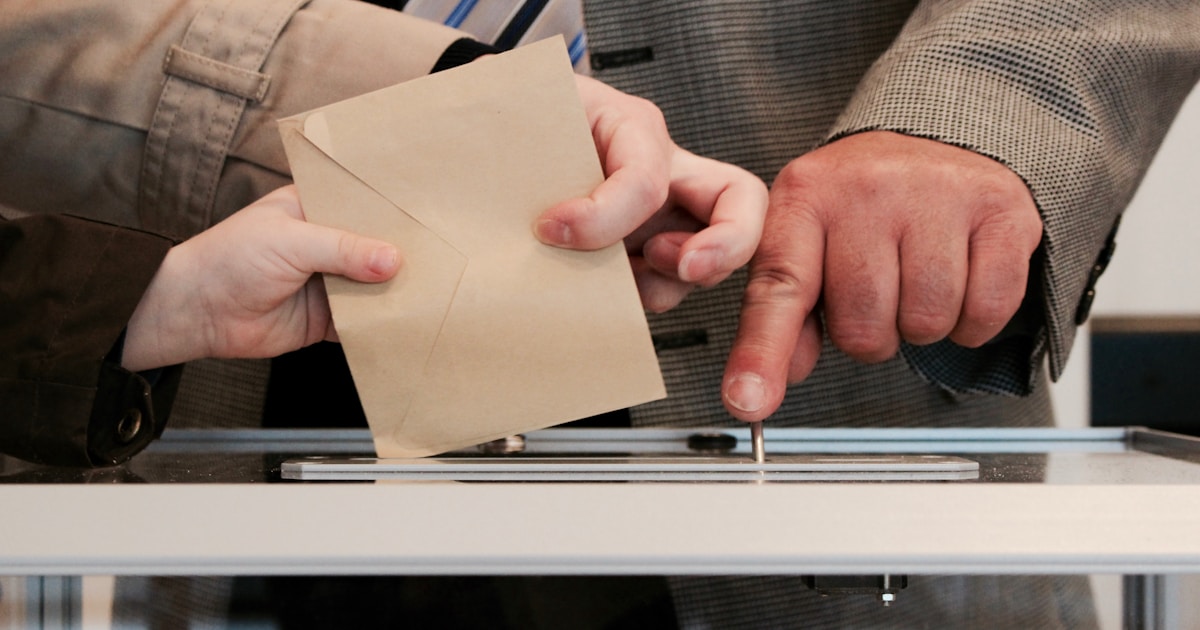
A Kenyan polling station on election day is a tightly controlled environment. Access is restricted by law to a defined set of authorized personnel. Understanding who can and who cannot be inside the station is essential for agents, observers, voters, and candidates alike.
This article is based on the ORPP Agents Quick Guide (June 2022), published by the Office of the Registrar of Political Parties, which details the authorized personnel at each polling station and their specific roles.
IEBC Polling Station Officials
The core team managing each polling station consists of a Presiding Officer (PO), a Deputy Presiding Officer (DPO), and six clerks, each with a specific, assigned duty. This team of eight is responsible for the entire voting process at the station, from opening to counting to results transmission.
The Presiding Officer (PO)
The Presiding Officer is the highest authority at the polling station. All decisions at the station level are made by the PO, and their instructions must be followed by all personnel and agents present. The PO's responsibilities include:
- Managing the overall conduct of voting at the station
- Verifying agent accreditation badges before allowing entry
- Displaying empty ballot boxes to agents before sealing
- Ensuring all election materials are present and intact
- Adjudicating disputes, including disputed ballots during counting
- Completing and signing all statutory results forms
- Transmitting results electronically via the KIEMS kit
- Maintaining the station diary with a record of all events
- Deciding whether voters who fail biometric verification can vote using the manual register
The Deputy Presiding Officer (DPO)
The Deputy Presiding Officer assists the PO in all duties and takes over if the PO is temporarily or permanently unable to continue. The DPO often supervises the clerks, manages the flow of voters, and assists with counting. In practice, the DPO is the PO's second-in-command and troubleshooter.
The Six Clerks
Each polling station is staffed with six clerks, and each clerk has a specific, defined role in the voting process. This specialization ensures efficiency and creates a chain of verification that no single person controls entirely:
| Clerk | Assigned Duty | Description |
|---|---|---|
| Clerk 1 | Queue Management | Manages the voter queue outside and at the entrance of the polling station. Ensures orderly flow, prevents cutting, and directs voters to the identification desk. Also ensures that no campaigning or disruption occurs in the queue area. |
| Clerk 2 | ID/Register Check | Checks the voter's national ID card or passport against the printed voter register. Confirms the voter is registered at this specific station and locates their entry in the register. This is the first layer of identity verification. |
| Clerk 3 | KIEMS Biometric Verification | Operates the KIEMS kit (Kenya Integrated Election Management System) to perform biometric (fingerprint) verification of the voter. If biometric verification fails, the voter may be verified manually using the printed register and alphanumeric search on the KIEMS kit, subject to PO approval. |
| Clerk 4 | Issue Ballot Papers and Stamp | Issues the voter their ballot papers (six papers for all six positions) and stamps each ballot with the IEBC official date stamp on the back. The stamp authenticates the ballot; an unstamped ballot will be rejected during counting. |
| Clerk 5 | Indelible Ink Marking | Applies indelible ink to the voter's left little finger (or another designated finger). The ink is designed to last several days and prevents a voter from voting twice at a different station. The ink is checked before voting and applied after receiving ballots. |
| Clerk 6 | Ballot Box Management | Directs the voter to the correct ballot boxes after they have marked their ballots in the voting booth. Ensures each ballot paper is deposited in the correct colour-coded ballot box. Also monitors the booth area to prevent ballot theft or damage. |
Security Personnel
Each polling station is assigned security personnel, typically drawn from the Kenya Police Service and/or the Administration Police Service. Their role is strictly limited to:
- Maintaining public order at and around the polling station
- Preventing unauthorized access to the station
- Protecting election materials and personnel
- Responding to security incidents such as violence, theft, or intimidation
Security personnel are not involved in the voting process itself. They do not handle ballot papers, operate the KIEMS kit, or participate in counting. Their presence is meant to ensure a safe environment, not to influence the electoral process. The number of security officers per station varies depending on the security classification of the area, but typically ranges from two to six officers.
Accredited Election Agents
As detailed in our guide to polling agents, each candidate and political party is entitled to one accredited agent per polling station. Agents must carry their IEBC-issued serialized badge and present it to the Presiding Officer upon arrival. Their role is to observe, not to participate in, the voting and counting process.
In a contested station with candidates for all six positions, there may be several dozen accredited agents present simultaneously. The Presiding Officer designates a seating area for agents where they can observe without obstructing the voting flow.
Accredited Election Observers
Domestic and international election observers may be present at polling stations, but only if they have been accredited by the IEBC. Observer organizations (such as the Kenya National Commission on Human Rights, the Elections Observation Group (ELOG), the European Union Election Observation Mission, the African Union, the Carter Center, and the Commonwealth Observer Group) apply for accreditation well in advance of the election.
Observers differ from agents in a critical way: observers are neutral and do not represent any candidate or party. Their role is to assess whether the election is being conducted freely, fairly, and in accordance with the law. Observers may take notes and report their findings but may not intervene in the process or object to specific procedures (that is the agent's role).
Accredited Media
Members of the media may be present at polling stations if they have been accredited by the IEBC. Media accreditation is separate from observer accreditation and comes with its own rules:
- Media may observe and report on the general atmosphere of voting
- Media may not photograph or film voters as they mark their ballots
- Media may not interview voters inside the polling station
- Media must follow the Presiding Officer's instructions regarding where they may stand and when they may be present
The media plays an important role in transparency, but their access is balanced against the need to protect voter privacy and prevent disruption.
Candidates Themselves
Under Kenyan electoral law, candidates themselves are authorized to visit polling stations within their electoral area. A presidential candidate may visit any polling station in the country. A gubernatorial candidate may visit any station in their county. An MCA candidate may visit stations within their ward.
However, candidates visiting polling stations must:
- Identify themselves to the Presiding Officer
- Not engage in any form of campaigning inside or near the station
- Not interfere with the voting process
- Not remain at the station for extended periods (brief visits only)
Who Is NOT Authorized
The following categories of people are not permitted inside a polling station on election day:
- Party officials who are not accredited as agents
- Campaign workers and mobilizers
- Unaccredited observers or researchers
- Family members or supporters of candidates
- Any person without proper IEBC accreditation or voter status
- Voters who have already cast their ballot (they must leave after voting)
- Minors (persons under 18 years of age)
The Presiding Officer has the authority to order the removal of any unauthorized person from the polling station. Security personnel enforce this authority. Any person who forces their way into a polling station or refuses to leave when ordered commits an offence under the Elections Act.
The Complete Authorized Personnel List
| Category | Authorization Source | Number per Station |
|---|---|---|
| Presiding Officer | IEBC appointment | 1 |
| Deputy Presiding Officer | IEBC appointment | 1 |
| Clerks (1-6) | IEBC appointment | 6 |
| Security Personnel | Government deployment | 2-6 (varies) |
| Accredited Agents | IEBC accreditation badge | 1 per candidate/party |
| Accredited Observers | IEBC observer accreditation | Varies |
| Accredited Media | IEBC media accreditation | Varies |
| Candidates | Candidacy (brief visits) | Varies |
| Registered Voters | Voter register for that station | Up to station register size |
Key Takeaways
- 8 IEBC officials per station: 1 PO, 1 DPO, and 6 specialized clerks with distinct duties
- 6 clerks with specific roles: queue management, ID check, KIEMS biometric, ballot issue/stamp, indelible ink, ballot box management
- Security personnel maintain order but do not participate in the voting process
- Agents, observers, and media must all be separately accredited by the IEBC
- Party officials, campaign workers, and unaccredited persons are not permitted inside the station
A well-staffed station runs smoothly. An undermanned one creates risk. Votrack monitors staffing, agent coverage, and station readiness across every polling station in Kenya. Request a demo to see how.
Share this article
Need Real-Time Election Tracking?
Votrack provides secure, parallel vote tallying for every electoral position in Kenya.
Learn More About Votrack