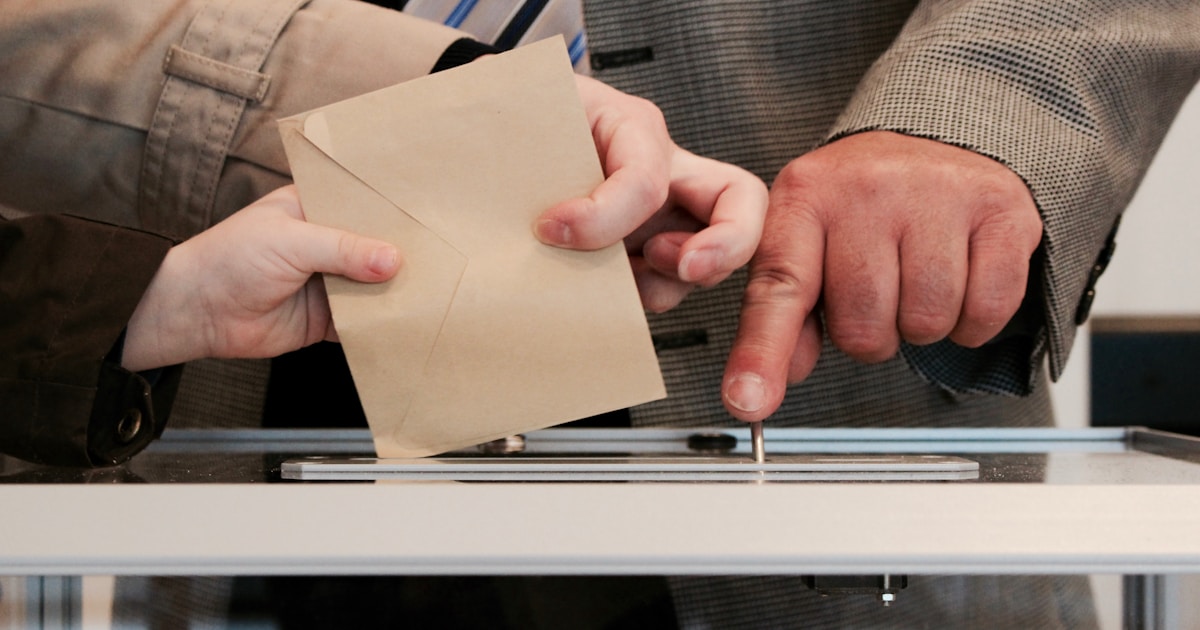
From chaotic party primaries in April to a disputed inauguration in September, Kenya's 2022 election cycle was 167 days of political drama compressed into five distinct phases. This is the definitive timeline.
Phase 1: Party Primaries (April 2022)
The 2022 election cycle began in earnest in April when Kenya's political parties held their nomination exercises. The two major coalitions, Kenya Kwanza (led by William Ruto) and Azimio la Umoja (led by Raila Odinga), each had to select candidates for 1,882 elective positions across six tiers of government.
The primaries were marked by widespread chaos. The United Democratic Alliance (UDA), Ruto's party, attempted direct nominations in over 200 constituencies but faced violence and irregularities in at least 47 of them. Candidates and their supporters clashed at polling centres in Kiambu, Nakuru, and Uasin Gishu counties. In several constituencies, UDA was forced to issue direct nominations after the process collapsed.
On the Azimio side, ODM's primaries were similarly troubled. In Mombasa, the gubernatorial primary between Abdulswamad Nassir and Mike Sonko was contested bitterly. In Kakamega, the ANC-ODM rivalry made primaries particularly volatile. The Orange Democratic Movement processed over 4,200 nomination disputes through its internal tribunal.
The Independent Electoral and Boundaries Commission had set 28th April 2022 as the deadline for party lists. By that date, IEBC had received nominations for 16,098 candidates vying for 1,882 seats, a ratio of roughly 8.5 candidates per seat.
Phase 2: Coalition Formation (May 2022)
May 2022 was the month of alliances. The two major coalitions had already been forming since late 2021, but the formal coalition agreements were registered with the Registrar of Political Parties in the first week of May.
Kenya Kwanza Alliance brought together UDA, ANC (Musalia Mudavadi), Ford-Kenya (Moses Wetangula), and several smaller parties. The alliance was cemented by the January 2022 Bomas rally where Mudavadi dramatically crossed the floor. Ruto offered Mudavadi the Prime Cabinet Secretary position and Wetangula the Senate Speaker role.
Azimio la Umoja One Kenya Coalition was anchored on ODM, Jubilee (President Uhuru Kenyatta's party), Wiper (Kalonzo Musyoka), and over 20 smaller parties. The coalition's biggest coup was securing Kenyatta's endorsement of Odinga, a historic handshake that realigned Kenyan politics.
The running mate selections defined this phase. Ruto picked Rigathi Gachagua, a relatively unknown Mathira MP, to lock down the Mt. Kenya vote. Odinga chose Martha Karua, the Narc-Kenya leader and former Justice Minister, making her the first woman on a major presidential ticket in Kenya.
Phase 3: The 90-Day Campaign (May-August 2022)
IEBC regulations limited active campaigning to 90 days before the election. From May through early August, Kenya was consumed by rallies, media appearances, and an unprecedented social media campaign.
Key campaign moments included:
- The Presidential Debates (July 26, 2022): Hosted at the Catholic University of Eastern Africa, the debate drew an estimated 8.2 million TV viewers. Ruto and Odinga clashed on economic policy, with Ruto hammering the "bottom-up" economic model while Odinga pushed social protection programmes.
- Ruto's Hustler Narrative: The UDA campaign centred on the "hustler vs dynasty" framing, positioning Ruto as a self-made man against established political families. Campaign spending on social media alone was estimated at KSh 2.8 billion across both coalitions.
- The Kenyatta Factor: President Uhuru Kenyatta actively campaigned for Odinga in Mt. Kenya, breaking the tradition of presidential neutrality. His rallies in Kiambu, Nyeri, and Muranga drew mixed reactions, with some analysts crediting them for preventing a total Odinga wipeout in the region.
Phase 4: Election Day to Declaration (9-15 August 2022)
Election day, 9th August 2022, was remarkably peaceful. Over 150,000 security personnel were deployed across 46,229 polling stations. Voting opened at 6:00 AM and closed at 5:00 PM, with some stations extending to 6:00 PM due to late openings.
The technology worked. All 55,200 KIEMS kits were deployed, achieving 99.5% biometric voter identification. Results transmission began immediately after counting at each station. By midnight on August 9th, roughly 40% of Forms 34A had been transmitted.
Then came the wait. IEBC Chairman Wafula Chebukati had promised results within 7 days of the election, the constitutional maximum. The tallying process at the Bomas of Kenya national tallying centre became increasingly tense as the margins narrowed.
On 15th August 2022, six days after the election, drama erupted at Bomas. Four of seven IEBC commissioners, led by Vice-Chair Juliana Cherera, held a separate press conference declaring they could not verify the results. Hours later, Chebukati declared Ruto the winner with 50.49% against Odinga's 48.85%.
Phase 5: The Supreme Court and Inauguration (August-September 2022)
Odinga filed a presidential petition at the Supreme Court on 22nd August 2022. The petition cited irregularities in results transmission, claiming that the IEBC portal showed discrepancies between Forms 34A (polling station) and Forms 34B (constituency). The petition also referenced the four dissenting commissioners.
The Supreme Court heard the petition over 6 days and delivered its unanimous judgment on 5th September 2022. Chief Justice Martha Koome, reading for the seven-judge bench, dismissed all grounds of the petition. The court found that while there were procedural irregularities, they were not of such magnitude as to affect the outcome.
William Ruto was inaugurated as Kenya's 5th President on 13th September 2022 at Kasarani Stadium. An estimated 60,000 people attended the ceremony, which was broadcast live across the country. Outgoing President Uhuru Kenyatta did not attend, sending his deputy (technically, Ruto himself) a curt congratulatory message.
The Timeline's Lasting Impact
Every phase of the 2022 timeline carries lessons for 2027:
- Primaries matter: Candidates who lost disputed primaries either defected or ran as independents, splitting votes in dozens of constituencies.
- Coalition arithmetic is decisive: Ruto's alliance with Mudavadi and Wetangula delivered Western Kenya votes that were previously out of reach for a Kalenjin candidate.
- Technology builds trust: The 100% electronic transmission silenced many rigging claims, even as the IEBC split undermined institutional credibility.
- The Supreme Court is the final arbiter: Its unanimous decision reinforced the legal framework, even as it left political questions unanswered.
Data note: Timeline dates are sourced from IEBC official calendars, Kenya Gazette notices, and the Supreme Court Presidential Petition No. E005 of 2022 judgment.
Share this article
Need Real-Time Election Tracking?
Votrack provides secure, parallel vote tallying for every electoral position in Kenya.
Learn More About Votrack