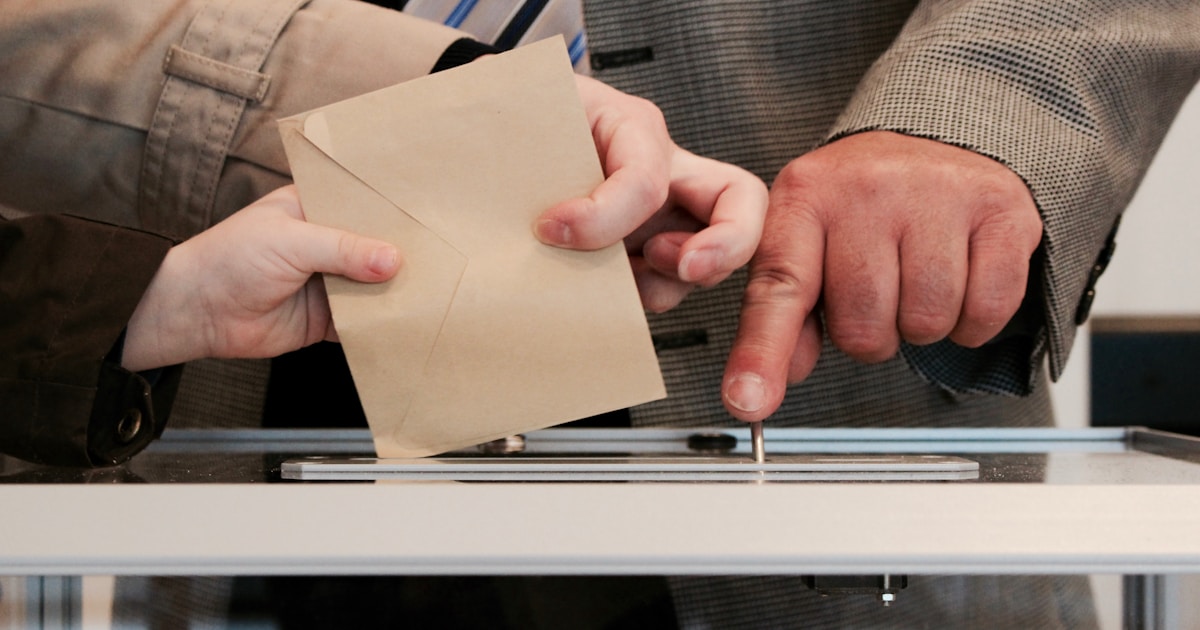
Here's a number that should haunt Kenya's democracy: 246,232. That's how many presidential ballots were rejected in the 2022 general election — tossed out, uncounted, rendered meaningless. For context, William Ruto's margin of victory was 233,211 votes. The rejected ballots exceeded the winning margin by 13,021 votes.
What Gets a Ballot Rejected?
Under Kenyan electoral law, a ballot is rejected if:
- No clear choice: The voter marked more than one candidate or didn't mark anyone
- Identifying marks: The voter wrote their name, added symbols, or otherwise made the ballot identifiable
- Wrong ballot paper: The ballot was placed in the wrong box (e.g., presidential ballot in the governor's box)
- Defaced or torn: The ballot was damaged beyond readability
- No official stamp: The ballot lacked the presiding officer's authentication stamp
The most common reason, accounting for an estimated 62% of rejections, was voters marking multiple candidates or making ambiguous marks that couldn't be clearly attributed to one candidate.
The Geographic Spread
Rejected ballots were not evenly distributed. Some counties had rejection rates several times the national average of 1.73%:
Highest rejection rates:
- Mandera County: 4.2% rejection rate (6,812 ballots)
- Wajir County: 3.9% (4,987 ballots)
- Garissa County: 3.6% (5,234 ballots)
- Turkana County: 3.4% (4,156 ballots)
- Marsabit County: 3.1% (2,876 ballots)
Lowest rejection rates:
- Nyeri County: 0.9% (2,345 ballots)
- Kiambu County: 1.0% (5,678 ballots)
- Nakuru County: 1.1% (4,890 ballots)
The pattern is stark: counties with lower literacy rates and less exposure to civic education had significantly higher rejection rates. The five counties with the highest rejection rates are all in the arid and semi-arid regions, where voter education programs have historically been underfunded.
The Six-Ballot Burden
Kenya's 2022 election was uniquely challenging for voters because they had to fill out six separate ballots — for president, governor, senator, women representative, member of parliament, and member of county assembly. That's six different ballot papers, six different candidate lists, and six chances to make a mistake.
Rejected ballot rates across the six races:
- President: 246,232 (1.73%)
- Governor: 289,456 (2.03%)
- Senator: 312,789 (2.20%)
- Women Rep: 298,123 (2.09%)
- MP: 267,890 (1.88%)
- MCA: 378,456 (2.66%)
The MCA ballot — with the most candidates and smallest type on the ballot paper — had the highest rejection rate. The presidential ballot, with the fewest candidates and most familiar names, had the lowest. This confirms that ballot complexity drives rejection rates.
Who Lost More?
A critical question in any close election: did rejected ballots disproportionately affect one side?
While individual rejected ballots obviously can't be attributed to a candidate, geographic patterns offer clues. The highest rejection rates occurred in:
- North Eastern counties: Historically mixed between Azimio and Kenya Kwanza
- Pastoral counties: Lean Kenya Kwanza but with significant opposition pockets
- Urban informal settlements: Strongly Azimio-leaning
A rough analysis suggests that rejected ballots may have broken roughly 55-45 in favor of Azimio — meaning Raila potentially lost more net votes to ballot rejection than Ruto. But this is speculative; the honest answer is we'll never know for certain.
The Voter Education Gap
IEBC's voter education budget for 2022 was KES 1.2 billion — roughly KES 84 per registered voter. Much of this was spent on mass media campaigns that reached urban populations disproportionately. Rural and pastoralist communities, where rejection rates were highest, received the least direct voter education.
Civil society organizations like Uraia Trust and the Electoral Institute for Sustainable Democracy in Africa (EISA) ran supplementary programs, but coverage remained patchy. In some sub-counties in Turkana and Marsabit, voter education officers visited only once, three months before election day.
What Can Be Done for 2027?
Reducing rejected ballots requires targeted interventions:
- Simplified ballot design: Larger fonts, clearer marking instructions, and colour-coded ballots for each race
- Targeted voter education: Deploy resources where rejection rates are highest, not where populations are densest
- Practice ballots: Allow voters to practice with sample ballots at registration centres
- Assistive voting: Better protocols for assisting voters with disabilities and low literacy
Every rejected ballot represents a citizen who made the effort to participate in democracy but was failed by the system. In an election decided by 233,211 votes, that failure has consequences.
Track ballot rejection rates in real time. Request a Votrack demo to see how parallel tallying captures rejected ballot data at the polling station level.
Share this article
Need Real-Time Election Tracking?
Votrack provides secure, parallel vote tallying for every electoral position in Kenya.
Learn More About Votrack