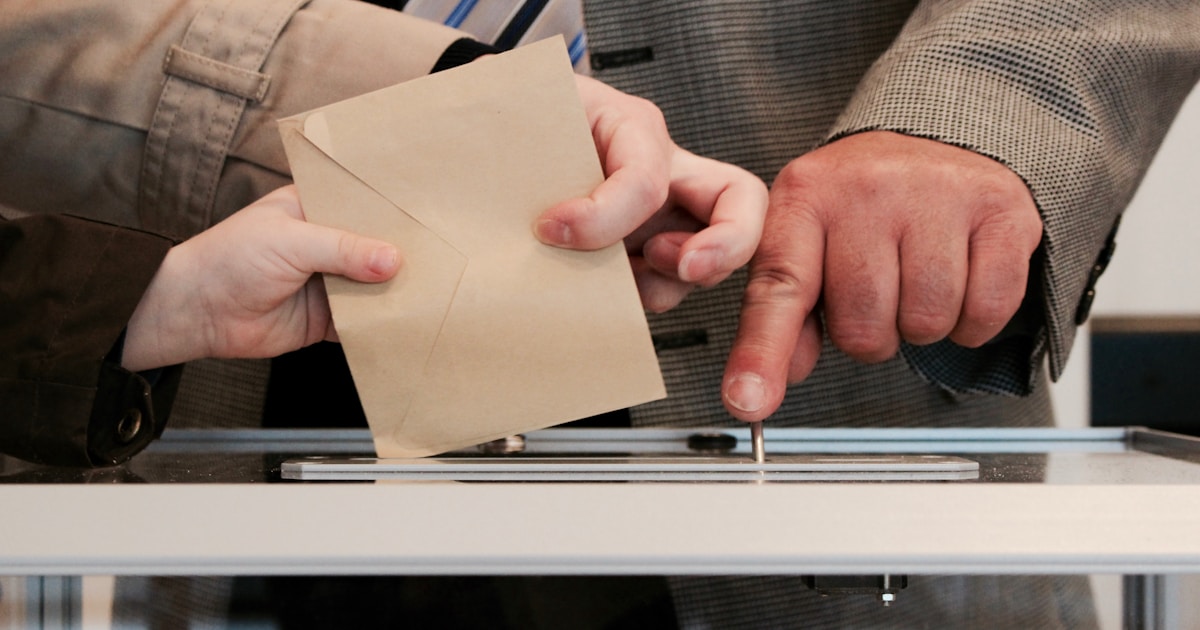
Democracy doesn't stop at the prison gate. In 2022, exactly 7,483 Kenyan inmates were registered to vote across 118 prison facilities — from maximum security complexes to small rural prisons.
When you think about elections in Kenya, you probably picture long queues at schools and community centres. You think about the drama at Bomas of Kenya. You think about political rallies in Uhuru Park and Kasarani Stadium. What you probably don't think about are the thousands of Kenyans who cast their ballots from behind prison walls.
But they did. And their story tells us something powerful about what democracy means in Kenya.
According to IEBC data, the commission registered 7,483 voters across 118 prison polling stations for the 2022 general election. These were not separate constituencies or wards. All prison voters were grouped under a special designation: County Code 049, Constituency 292, Ward 1451 — all labeled simply "PRISONS."
The Biggest Prison Polling Stations
Not all prisons are equal when it comes to voter numbers. The largest prison electorate in 2022 was at Kamiti Main Prison in Nairobi, which had two polling stations with 362 registered voters each — a total of 724 voters. Kamiti is Kenya's most famous maximum security prison, housing some of the country's most notorious criminals alongside many ordinary inmates.
The second largest was Kisumu Main Prison with 494 voters, followed by Naivasha Main Prison at 390 voters and Shimo La Tewa Main in Mombasa with 375 voters.
At the other end of the spectrum were tiny prison facilities with barely any registered voters. Kitui Women had just 1 voter. Busia Women Wing also had just 1. Loitokitok GK Prison had 3 voters. Kehancha Prison had 4. Mandera Prison and Kwale Women each had 4 voters.
These numbers might seem trivially small. But think about what it means: even in a prison with just one registered voter, the IEBC still set up a polling station, sent officials, printed a ballot, and counted that one vote. That is the machinery of democracy at work, even for a single citizen behind bars.
Women's Prisons: A Tiny Fraction
One of the most striking patterns in the prison voter data is the massive gender gap. Kenya's prison system has separate women's facilities, and their voter numbers are dramatically smaller. Langata Women Prison in Nairobi had the most female prison voters at 130. But most women's prisons had fewer than 25 voters.
Here's the breakdown: Kisumu Women had 22, Meru Women had 22, Nyeri Women had 17, Kitale Women had 16, Naivasha Women had 13, Malindi Women had 13, Shimo La Tewa Women had 10, Machakos Women had 10, Nakuru Women had 10, Wajir had 9 (no separate women's facility noted), T/Fall Women had 9, Kakamega Women had 8, Eldoret Women had 5, Thika Women had 5, Muranga Women had 5, and Kwale Women and Busia Women each had just 4 and 1 voters respectively.
The total number of registered voters in women's prisons was approximately 310 — just 4.1% of all prison voters. This reflects the broader reality of Kenya's prison population: according to the Kenya Prisons Service, women make up roughly 4-5% of the total incarcerated population.
The Legal Basis: Why Prisoners Can Vote
Many Kenyans are surprised to learn that prisoners can vote at all. But the right is enshrined in the 2010 Constitution of Kenya. Article 38 guarantees every citizen the right to vote, and unlike some countries, Kenya does not strip this right from incarcerated people.
However, it was not always this way. Before 2010, prisoners did not vote. The constitutional provision was tested in court, and in a landmark 2015 ruling, the High Court confirmed that IEBC must facilitate prisoner voting. By 2017, the commission had begun registering prison voters, and by 2022, the system was fully operational across 118 facilities.
This puts Kenya ahead of many democracies. The United States, for example, strips voting rights from millions of convicted felons, even after they have served their sentences. Several European countries restrict prisoner voting. Kenya's approach — that citizenship and its rights are not diminished by incarceration — is progressive by global standards.
The Regional Spread
Prison voters were distributed across the country, though the concentration followed population patterns and the location of major prison facilities. The Coast region had several large facilities: Shimo La Tewa (375 + 30 + 10 = 415 voters across main, medium, and women), Manyani (189), Malindi (154 + 13 = 167).
Central Kenya had major facilities at Kamiti (724 total), Nyeri (276 + 17 + 75 = 368), Embu (349 + 33 = 382), Meru (360 + 22 + 15 = 397), and Kerugoya (62). The Rift Valley had significant numbers at Naivasha (390 + 75 + 13 = 478), Nakuru (171 + 10 = 181), and Kitale (176 + 21 + 36 + 16 = 249).
Western Kenya had Kisumu as the standout with its main prison (494), medium (132), women (22), Kibos Main (79), and Kibos Medium (15) — totaling 742 voters in the Kisumu prison complex alone. That made the Kisumu area the second-largest prison voting bloc after the Kamiti-Nairobi cluster.
Challenges and Questions
The prison voting program is not without challenges. First, there is the question of voter education. Inmates in isolation may not have access to campaign information, media, or political rallies. How informed is their vote? The Standard newspaper has reported on the difficulties of conducting voter education inside prison walls.
Second, there is the logistical challenge. Setting up 118 polling stations across prisons — many in remote locations — requires significant resources. Each station needs election officials, materials, security, and oversight. For a prison with just 3 or 4 voters, this is an expensive proposition per vote.
Third, there is the question of which constituency prison voters belong to. Currently, all prison voters are lumped under a single national "PRISONS" designation. This means their votes do not count toward any specific county, constituency, or ward representative. Prison voters can only vote for the presidential race, not for governors, senators, MPs, or MCAs.
What This Means for 2027
Kenya's prison population is growing. The Kenya Prisons Service reported overcrowding in many facilities. If voter registration inside prisons keeps pace with the population, we could see 8,000 to 10,000 prison voters in 2027.
There is also a growing conversation about whether prison voters should be allowed to vote for local representatives — not just the president. If a prisoner is serving time in Kamiti but is from Kisumu, should their vote count in Kisumu's local races? Or should they vote where they are physically located?
These questions will become more pressing as Kenya's democracy matures. For now, the 7,483 Kenyans who voted from behind bars in 2022 are a testament to the fact that in Kenya, the right to vote belongs to every citizen — even those in orange jumpsuits. For more on the unique voter categories that shaped the 2022 election, see our national results analysis and our Mombasa turnout spotlight.
Monitor every polling station — including prisons. Votrack tracks all 46,229 regular polling stations plus 118 prison stations, giving you complete coverage of Kenya's electoral landscape. Request a demo to see the full picture.
Share this article
Need Real-Time Election Tracking?
Votrack provides secure, parallel vote tallying for every electoral position in Kenya.
Learn More About Votrack