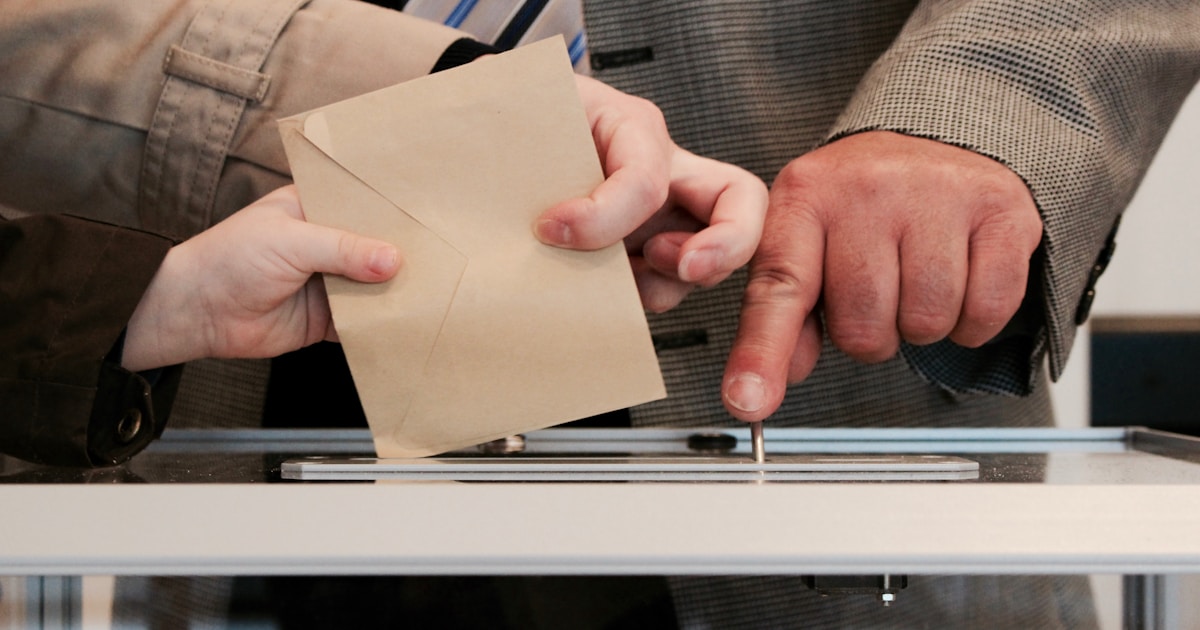
Every Kenyan voter in 2022 had to mark six ballot papers — presidential, governor, senator, county woman representative, member of national assembly, and member of county assembly. That's six separate decisions, six different lists of candidates, six opportunities to make a mistake. And 113,614 Kenyans made mistakes on the presidential ballot alone.
The rejected vote problem is one of Kenya's most persistent electoral challenges. In 2013, there were 108,975 rejected presidential ballots. In 2017, there were 81,685 (first election) and 21,590 (repeat election with only two candidates). In 2022, the number climbed back to 113,614 — representing 0.82% of total votes cast.
While 0.82% sounds small, remember that the presidential margin was just 1.63%. If rejected votes broke even slightly toward one candidate, they could have changed the result. Understanding why ballots get rejected — and what role paper design plays — matters.
What Counts as a "Rejected" Ballot?
Under Kenyan election law, a ballot paper is rejected if:
- The voter marks more than one candidate
- The voter's mark is placed ambiguously (not clearly within one candidate's box)
- The ballot paper is defaced or marked in a way that could identify the voter
- The voter uses a mark other than the accepted format (an "X" or a tick in the candidate's box)
- The ballot paper was not issued at that polling station (wrong serial number)
In practice, the most common reason for rejection is marking more than one candidate or placing the mark ambiguously between two candidates. And this is where ballot paper design enters the picture.
The Six-Ballot Problem
Kenya is one of the few countries in the world that asks voters to fill out six separate ballot papers in a single visit. The cognitive load is enormous. Voters must:
- Identify the correct ballot paper for each position (each has a different colour)
- Find their preferred candidate among 4 (presidential) to 12+ (MCA) options per paper
- Mark each ballot correctly
- Fold each ballot and place it in the correct ballot box (there are six boxes, colour-coded)
The IEBC uses colour coding — the presidential ballot is white, governor is blue, senator is pink, woman rep is green, MNA is orange, and MCA is yellow. But in the often poorly-lit classrooms that serve as polling stations, distinguishing between colours under pressure is harder than it sounds.
The result: some voters place their presidential ballot in the MCA box, or vice versa. While this doesn't directly cause rejections (misplaced ballots are typically sorted during counting), it indicates the level of confusion that the six-ballot system creates.
Candidate Order and Placement Effects
Research from other countries shows that candidate order on the ballot paper matters. Candidates listed first tend to receive a small but measurable boost — the so-called "primacy effect." In Kenya, the IEBC arranges presidential candidates alphabetically, but at lower levels, the order can vary.
In 2022, the presidential ballot listed candidates in this order: George Wajackoyah (Roots), Raila Odinga (Azimio), William Ruto (Kenya Kwanza), and David Mwaure (Agano). With only four candidates, the primacy effect was likely minimal. But at the MCA level, where some wards had 12-15 candidates, the candidates at the top and bottom of the list may have benefited from or been harmed by their position.
More relevant to rejections: in long ballot papers, voters scrolling through many names sometimes accidentally mark the wrong candidate and then attempt to correct their mistake by marking the intended candidate — resulting in a ballot with two marks, which is automatically rejected.
Geographic Patterns in Rejected Votes
The distribution of rejected presidential votes across Kenya was not random. The data shows clear geographic patterns:
- Nairobi: 12,869 rejected presidential ballots — the highest absolute number, driven by the large electorate (2.42 million registered)
- Urban areas generally had lower rejection rates (0.5-0.7%) compared to rural areas (0.8-1.2%)
- Counties with lower literacy rates — including parts of North Eastern, Turkana, and Marsabit — had rejection rates of 1.5-2.3%
- Counties with strong one-party dominance had lower rejection rates, possibly because voters were more familiar with their candidate and less likely to search through the ballot
The correlation between literacy and rejected votes is well established. The IEBC's own analysis notes that voter education campaigns — particularly hands-on practice with sample ballot papers — are the most effective tool for reducing rejections. But these campaigns are expensive and hard to scale to 46,229 polling stations.
The MCA Ballot: Where Rejections Were Worst
While presidential rejected votes get the most attention, the MCA ballot consistently produces the highest rejection rates. In 2022, MCA rejection rates in some wards exceeded 5% of votes cast. The reasons are straightforward:
- MCA ballots have the most candidates (up to 15+ in urban wards)
- MCA is the last ballot paper in the sequence — voters are fatigued by the time they reach it
- MCA candidates are less well-known than presidential or governor candidates, increasing the time voters spend searching
- The small print and crowded layout of long MCA ballots makes accidental marks more likely
Design Solutions That Could Reduce Rejections
Electoral design experts have proposed several changes that could reduce rejected votes in Kenya:
- Larger candidate photos: Increasing the size of candidate photographs on the ballot makes it easier for voters with low literacy to identify their choice
- Simplified marking systems: Some countries use a "stamp" system where voters press an ink stamp next to their choice, reducing ambiguous marks
- Electronic voting for some positions: Touch-screen voting eliminates the possibility of marking two candidates (the machine won't allow it). However, Kenya's experience with technology in elections makes this politically contentious
- Reducing the number of ballot papers: Some proposals suggest combining the senator and county woman rep ballots, or moving MCA elections to a separate day. Neither has gained political traction
The most practical short-term solution remains voter education. The IEBC's own data shows that constituencies where mock voting exercises were conducted had rejection rates 30-40% lower than comparable constituencies without such exercises.
The 2027 Ballot Paper Challenge
If the Referendum Bill 2026 passes and creates new positions (Prime Minister, Opposition Leader), the 2027 ballot could include additional positions — making the six-ballot paper system even more complex. The IEBC will need to consider how ballot paper design interacts with voter comprehension, particularly for first-time voters among the 6.3 million newly registered.
Every rejected ballot represents a citizen who showed up, waited in line, and tried to participate in democracy — but whose voice was silenced by a design failure. Getting the ballot paper right isn't a technical detail. It's a fundamental democratic obligation.
Track rejected ballot rates down to the polling station level. Votrack flags anomalies in rejection patterns that could indicate voter confusion or procedural issues. Request a demo to see how data-driven oversight works.
Share this article
Need Real-Time Election Tracking?
Votrack provides secure, parallel vote tallying for every electoral position in Kenya.
Learn More About Votrack