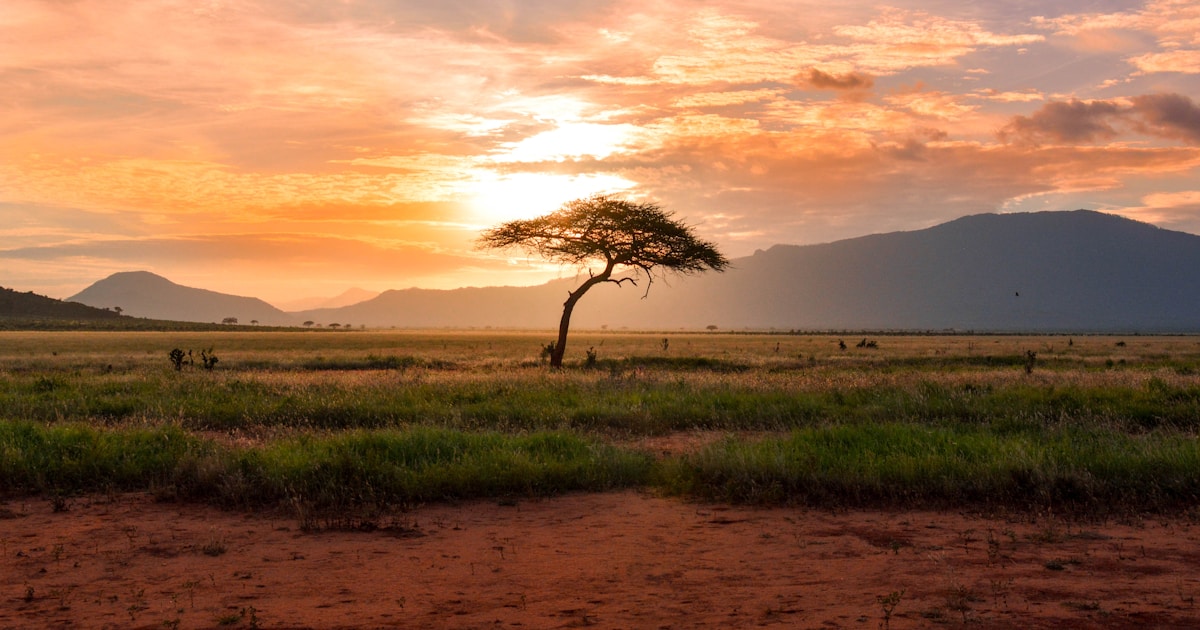
Turkana is Kenya’s largest county by land area — over 77,000 square kilometres of arid terrain stretching from Lake Turkana to the borders of Uganda, South Sudan, and Ethiopia. It had 238,554 registered voters in 2022, a modest number for its size. Odinga won 66.97% against Ruto’s 32.53%. But the numbers barely hint at the story. In 2017, 52% of Turkana’s polling stations had zero network coverage. Running an election here is an exercise in logistics under extreme conditions.
Turkana’s turnout of 60.63% was below the national average of 64.77%, but arguably impressive given that some voters must travel hours across desert to reach a polling station.
The 2022 Presidential Result
- Raila Odinga (Azimio): 96,117 votes (66.97%)
- William Ruto (UDA): 46,696 votes (32.53%)
- George Wajackoyah (Roots): 445 votes (0.31%)
- David Mwaure (Agano): 274 votes (0.19%)
- Total valid votes: 143,532
- Rejected ballots: 1,099
- Registered voters: 238,554
- Turnout: 60.63%
Odinga’s margin was 49,421 votes. Ruto’s 32.53% was a notable showing in a county that has traditionally leaned toward the opposition. In 2017, Kenyatta received 58,744 votes (44.73%), which was higher than Ruto’s 2022 share. The Jubilee brand had stronger traction in Turkana in 2017, partly because of national development promises related to the LAPSSET corridor and oil exploration in Lokichar Basin.
The Network Coverage Crisis
Turkana’s most striking electoral statistic is not about votes. It is about infrastructure. According to the IEBC’s 2017 post-election evaluation, Turkana had 644 polling stations, of which:
- 142 stations (22.05%) were covered by 3G or 4G
- 162 stations (25.16%) relied on satellite coverage
- 337 stations (52.33%) had zero network coverage
- 3 stations had pending data
That means over half of Turkana’s polling stations could not digitally transmit results on election day. Results had to be physically transported — sometimes across hundreds of kilometres of unpaved roads — to constituency tallying centres. This introduces delays, logistical risks, and opportunities for disputes.
By 2022, some improvements had been made. The IEBC deployed KIEMs kits with satellite backup capability, and materials were airlifted to remote counties including Turkana, Wajir, and Mandera. But the fundamental challenge remains: conducting a modern election in a county where basic telecommunications infrastructure is absent in half the territory.
Elections Without Network? Votrack Has a Solution.
Votrack supports USSD, SMS, and Telegram-based result submission — not just web. In counties like Turkana where 52% of stations lack connectivity, agents can submit results via low-bandwidth channels that work even on 2G networks.
Request a DemoTurnout: 2017 vs 2022
Turkana’s turnout tells a story of declining participation despite growing registration:
- 2017: 191,435 registered voters, 131,368 valid votes cast (~68.6% turnout)
- 2022: 238,554 registered voters, 143,532 valid votes cast (60.63% turnout)
Registration grew by 47,119 voters (+24.6%), but valid votes cast grew by only 12,164 (+9.3%). The turnout gap widened by roughly 8 percentage points. This pattern mirrors the national trend but is especially concerning in a county where reaching a polling station can be a genuine physical challenge.
Multiple factors drive low turnout in Turkana. The Standard Digital reported that nomadic pastoralist communities face particular barriers: they move with livestock and may be far from their registered polling station on election day. The IEBC’s own recommendations specifically called for mapping mobility patterns of nomadic communities to improve access.
Turkana in the Northern Kenya Context
Turkana is part of a band of northern counties — alongside Marsabit, Samburu, and West Pokot — that share challenges of vast geography, sparse population, and limited infrastructure. In 2022, these counties voted differently despite similar conditions:
- Turkana: Odinga 66.97%
- Samburu: Odinga 59.33%
- Marsabit: Ruto 51.16% (marginal)
- West Pokot: Ruto 63.30%
Turkana and Samburu leaned Odinga; West Pokot leaned Ruto (reflecting its Kalenjin-majority demographics); and Marsabit was a genuine toss-up. The northern frontier is not a political monolith — it is a patchwork of community loyalties, development promises, and clan dynamics.
What Turkana Tells Us About Elections in Remote Areas
- Infrastructure determines integrity. When 52% of stations have no network coverage, the gap between casting a vote and having it counted widens. Physical result transport introduces hours or days of delay and multiple handling points.
- Registration outpaces participation. Adding 47,000 voters to the register means nothing if they cannot or do not vote. Targeted GOTV efforts for pastoralist communities could shift outcomes.
- Low-bandwidth solutions are essential. The IEBC’s Results Transmission System requires 3G/4G. In counties like Turkana, SMS and USSD-based parallel tallying systems are the only reliable way to verify results in real time.
For the legal framework governing elections in remote areas, see the Elections Act, 2011 which mandates that all registered voters must have reasonable access to polling stations.
Turkana has 644 polling stations scattered across 77,000 square kilometres. Many are unreachable by road during the rainy season. Votrack’s multi-channel tallying system — web, USSD, SMS, and Telegram — ensures that even the most remote station can report results digitally. Request a demo and bring real-time transparency to every corner of Kenya.
Share this article
Need Real-Time Election Tracking?
Votrack provides secure, parallel vote tallying for every electoral position in Kenya.
Learn More About Votrack