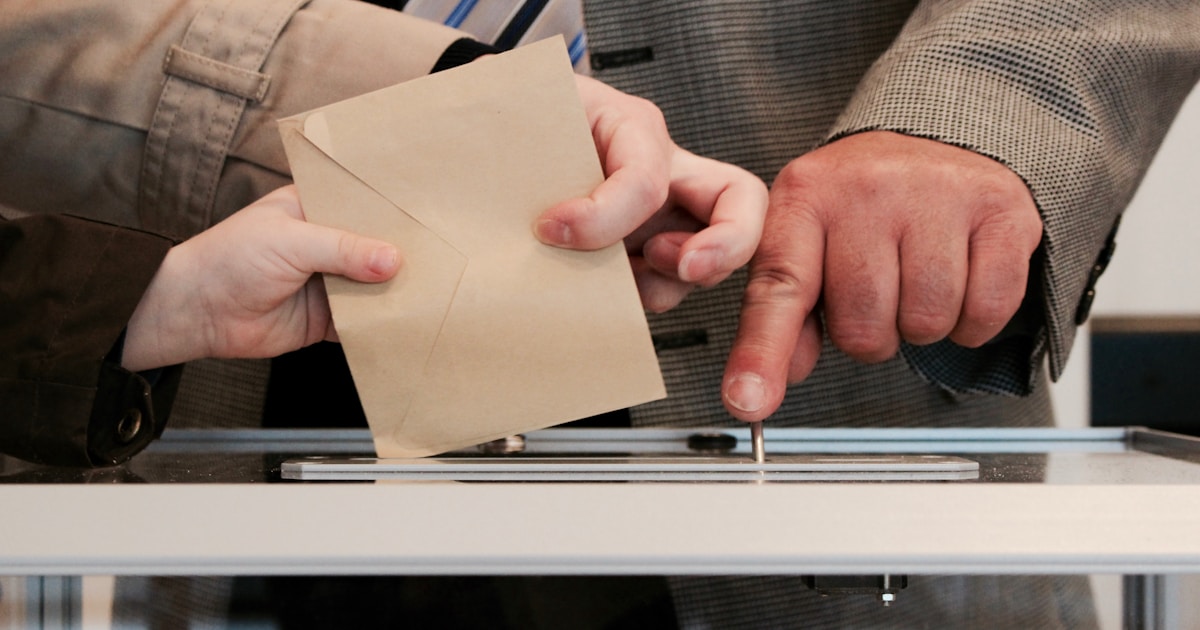
The Kamba community overwhelmingly backed Odinga in 2022, with Machakos at 74% and Makueni at 79%. Together, these two counties handed Odinga a massive advantage that nearly decided the election.
If you grew up in Kenya, you know that Ukambani has always been one of the most politically interesting regions in the country. The Kamba community, the fifth largest ethnic group, has never produced a president. But they have always been kingmakers. In 2022, they placed their bet on the late Raila Odinga — and they did it with overwhelming force.
Let us start with the raw numbers. In Machakos County, Odinga won 304,809 votes (74.30%) against Ruto's 101,456 votes (24.73%). That is a margin of more than 203,000 votes from a single county. In Makueni County, Odinga did even better: 229,213 votes (78.82%) against Ruto's 59,195 votes (20.36%) — a margin of 170,018 votes.
Combined, Machakos and Makueni gave Odinga a net advantage of 373,371 votes. To put this in perspective, Ruto won the entire presidential election by only 233,211 votes. The Kamba vote alone from just these two counties was bigger than Ruto's winning margin. The third Kamba county, Kitui, added another 145,983 votes to Odinga's column. The Kamba bloc delivered over half a million net votes for a candidate who still lost.
The Kalonzo Factor
Why did the Kamba vote go so heavily to Odinga? One name: Stephen Kalonzo Musyoka. The former Vice President and Machakos native was Odinga's running mate in the Azimio la Umoja coalition. For the Kamba community, voting for Odinga meant voting for Kalonzo — and the hope that if Odinga won, they would finally have one of their own close to the presidency.
This was not new. In 2013, Kalonzo ran as Odinga's running mate and Ukambani voted heavily for them. In 2017, the same pattern repeated. By 2022, the Kamba community had voted for Odinga-Kalonzo tickets in three consecutive elections. The loyalty was remarkable and consistent.
But here is the painful truth: despite delivering such massive margins, Ukambani has not yet translated those votes into executive power. The late Raila Odinga lost all three times, and Kalonzo remained on the outside looking in. As we head towards 2027, the question for Kamba leaders is whether to continue backing a coalition candidate or to chart an independent path. For more on how regional blocs shaped the 2022 outcome, see our complete national analysis.
Turnout: Enthusiastic but Not Exceptional
Despite the strong vote shares, turnout in both counties was moderate. Machakos recorded 60.20% turnout from its 687,691 registered voters, while Makueni had 61.05% from 479,516 registered voters. These numbers are below the national average of about 64.8%.
Why the relatively low turnout? Part of the answer is the large diaspora population. Machakos borders Nairobi, and many registered voters in Machakos actually live and work in the capital. Getting home to vote on a weekday is not always easy. Makueni, being more rural, had slightly better turnout because more of its voters live close to their polling stations.
Compare this with IEBC data for Rift Valley counties like Bomet (79.88%) and Kericho (78.56%), and the gap becomes clear. If Machakos and Makueni had matched Rift Valley turnout levels, Odinga could have netted an additional 100,000 or more votes — potentially closing the gap with Ruto significantly.
Rejected Ballots and Minor Candidates
Machakos had 3,759 rejected ballots and Makueni had 1,908. George Wajackoyah picked up 2,903 votes in Machakos and 1,836 in Makueni — mostly protest votes from younger voters attracted by his colorful campaign. David Waihiga Mwaure, the Agano Party candidate, got 1,070 and 575 votes respectively.
These numbers are small in the grand scheme. But in an election decided by 233,211 votes nationally, every vote counted. The combined Wajackoyah vote in these two counties alone (4,739) is a reminder that fringe candidates can nibble at the margins of a tight race.
The Machakos-Makueni Comparison
While both counties voted for Odinga, there are interesting differences. Makueni was more rural, more cohesive, and more loyal to the Odinga-Kalonzo ticket. Its 78.82% vote share for Odinga was nearly five percentage points higher than Machakos's 74.30%. Makueni also had fewer rejected ballots and a cleaner vote.
Machakos, on the other hand, is more urbanized. Machakos town and Athi River have attracted significant non-Kamba populations who diluted the ethnic vote. Ruto's 24.73% in Machakos was substantially better than his 20.36% in Makueni — a four-point gap that reflects Machakos's more diverse voter base.
What This Means for 2027
With the passing of the late Raila Odinga in October 2025, the opposition landscape has fundamentally changed. The Kamba community now faces a critical question: who do they back in 2027?
Kalonzo Musyoka, now 75, has been in national politics for over three decades. He ran for president in 2007 and came third. He was running mate three times. If he runs again in 2027, Ukambani will almost certainly rally behind him. But can Kalonzo build a coalition that extends beyond the Kamba heartland?
The other possibility is that the Kamba vote splits. Machakos Governor Wavinya Ndeti and other local politicians have their own ambitions. A divided Kamba vote would dramatically reduce the community's bargaining power.
For Machakos and Makueni residents, the 2022 results are a record of what unified community voting looks like. Whether that unity holds in 2027 will depend on whether Kamba leaders can agree on a single strategy. Read more about how community blocs performed in our Kiambu County Spotlight and our Kisumu analysis.
Track every county, every ward, every polling station. Votrack gives political parties and election observers the tools to monitor results across all 47 counties in real time. Request a demo and see Ukambani's 2,500+ polling stations on one dashboard.
Share this article
Need Real-Time Election Tracking?
Votrack provides secure, parallel vote tallying for every electoral position in Kenya.
Learn More About Votrack