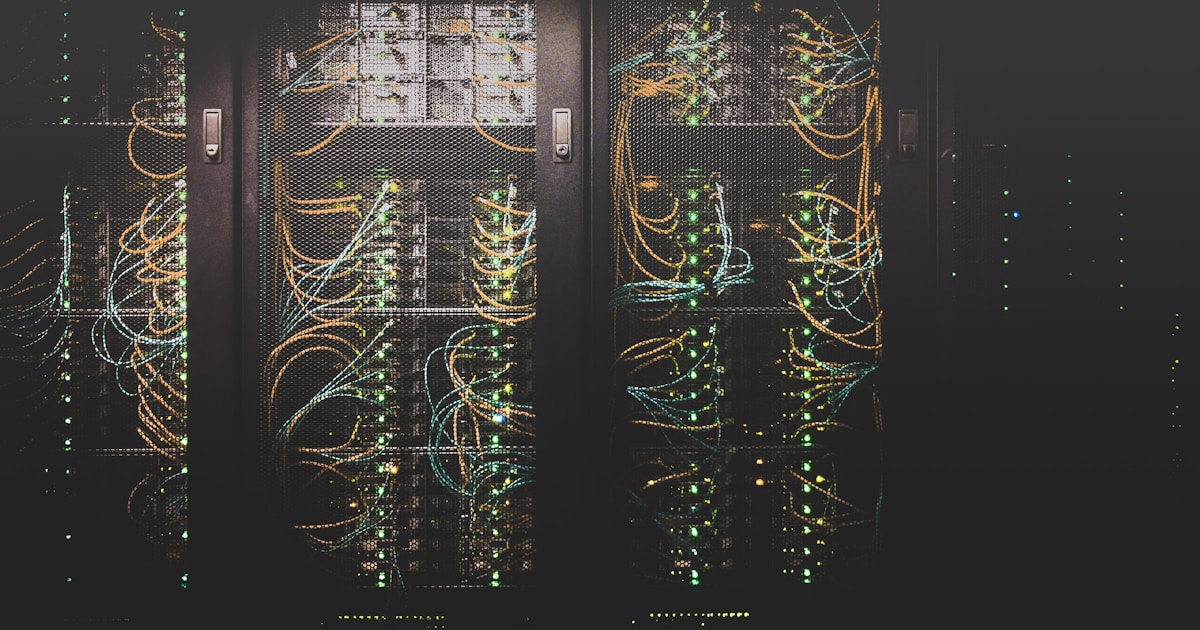
Every Kenyan election since 2013 has been haunted by the same ghost: the servers. Who controls them? Can they be manipulated? Did the numbers that arrived at Bomas of Kenya match the ones counted at 46,229 polling stations across the country? In 2022, IEBC deployed its most sophisticated results transmission system yet — and the controversy was more technical, more specific, and arguably more important than ever before.
How KIEMS Actually Worked in 2022
The Kenya Integrated Election Management System (KIEMS) combined biometric voter identification with electronic results transmission in a single device. Here's what the kit did at each polling station:
- Voter identification: Fingerprint and facial recognition verification against the registered voter database.
- Results capture: The presiding officer photographed the completed Form 34A (presidential results) and uploaded it via the KIEMS kit.
- Transmission: The image was sent over Safaricom's 4G network to IEBC servers, with Telkom Kenya as backup.
- Public display: Results were published on the IEBC portal in near-real-time, allowing anyone to verify individual polling station forms.
IEBC procured 55,000 KIEMS kits at a cost of approximately KES 8 billion. Of these, 46,229 were deployed to polling stations, with the remainder held as backups or used at registration centers.
The Transmission Numbers
According to IEBC's own data, 97.2% of Form 34A images were successfully transmitted electronically by the close of the tallying process. The remaining 2.8% — approximately 1,294 polling stations — required physical delivery of forms due to network failures, kit malfunctions, or other technical issues.
This was a significant improvement over 2017, when approximately 11,000 forms failed to transmit electronically. But it was that 2.8% gap that Azimio la Umoja seized upon in their Supreme Court petition.
The Azimio Challenge: What Was Actually Alleged
Raila Odinga's legal team made several specific technology claims in their petition:
- That unauthorized access to IEBC servers occurred during the tallying period, with foreign IP addresses detected.
- That approximately 140,000 results forms were uploaded from devices other than official KIEMS kits — suggesting results could have been injected into the system.
- That the final tally of 7,176,141 votes for Ruto and 6,942,930 for Odinga contained arithmetic inconsistencies at the constituency level.
- That IEBC Chairman Wafula Chebukati declared results that four of seven commissioners had refused to verify — the so-called "Cherera Four" dissent.
What the Supreme Court Found
The Supreme Court, in a unanimous decision delivered on September 5, 2022, rejected all technology-related claims. Key findings included:
- The alleged foreign access was traced to authorized IEBC technical staff using VPN connections — standard practice for remote system administration.
- The "non-KIEMS uploads" were explained by the fact that IEBC used multiple device types for different form levels (34A, 34B, 34C), and the petitioner's analysis had conflated device categories.
- The arithmetic challenges were found to involve rounding errors and rejected ballot discrepancies that did not materially affect the outcome.
The court upheld Ruto's victory with a margin of 233,211 votes (1.63%) — narrow by Kenyan standards but legally decisive.
The Real Vulnerability: The Paper Trail
What the servers debate often obscures is that Kenya's electoral system is fundamentally paper-based. The legal results are the physical Form 34A/B/C documents, not the electronic images. Every polling station result is hand-counted, hand-recorded, and physically signed by agents from all parties present.
This means the real vulnerability isn't server hacking — it's what happens in the 290 constituency tallying centers where Form 34Bs are compiled, and at the 47 county tallying centers where Form 34Cs are generated. It's at these aggregation points where human error, manipulation, or arithmetic fraud could theoretically alter outcomes.
Why Parallel Vote Tallying Matters
This is precisely why independent parallel vote tallying (PVT) systems like Votrack exist. By capturing and independently tallying results from the polling station level, PVT systems create a verification layer that is completely independent of IEBC infrastructure. If the official electronic transmission is compromised, the parallel tally provides an independent check. If the physical forms are altered at tallying centers, the electronic originals provide evidence.
Book a Votrack demo to see how parallel tallying catches discrepancies before they become disputes.
Lessons for 2027
The technology debate will return in 2027 — it always does. But the conversation needs to evolve beyond "were the servers hacked?" to more specific questions: What is the chain of custody for physical forms? How are constituency-level aggregations verified? Who has access to tallying center networks? These are the questions that will determine whether Kenya's next election is trusted. The servers are just the beginning.
Share this article
Need Real-Time Election Tracking?
Votrack provides secure, parallel vote tallying for every electoral position in Kenya.
Learn More About Votrack