Your agent is at the polling station. Votes are being counted. What do they do?
There is a moment in every election that decides everything. It is not when voters queue up in the morning. It is not when the presiding officer seals the ballot box. It is when the counting begins.
At every polling station in Kenya, once the last voter has cast their ballot, the presiding officer opens the box and counts the votes publicly. The results are announced, written on a tally sheet, and posted at the station. Your agent is standing right there. They see the numbers. They hear the announcement.
What happens next determines whether your campaign has an independent record of what happened at that station — or whether you are entirely dependent on the IEBC's chain of transmission to deliver those numbers accurately to the national tally.
In 2022, the presidential election was decided by 233,211 votes across 46,229 stations. That is about 5 votes per station. If your campaign cannot independently verify what happened at each station, you are flying blind in one of the closest elections in African history.
This guide walks you through exactly what an agent does on election day using Votrack.
Step 1: Before Election Day — Setup and Training
Parallel vote tallying does not start on election day. It starts weeks before, when your campaign assigns agents to stations and they learn the system.
In Votrack, your campaign manager creates the deployment in the admin dashboard. Each agent is assigned to a specific polling station. They receive their login credentials and are trained on whichever reporting channel they will use — web dashboard, USSD, or Telegram.
The key decision is which channel to assign based on the station's connectivity:
In 2017, IEBC data showed that 88% of stations had 3G/4G, 4% had satellite, and 7% had no coverage at all. But the situation varies wildly by county. In Turkana, 52% of stations had zero coverage. In Nairobi, 99.6% had full 3G/4G. Your channel assignment must match each station's reality.
Training is straightforward. The web dashboard requires a smartphone with internet. USSD requires any phone that can make calls — even a KSh 1,000 feature phone. Telegram requires a smartphone with data or Wi-Fi. Most agents can learn their channel in 30 minutes.
Step 2: Election Day Morning — Arrival and Verification
Your agent arrives at the polling station by 5:30 AM, before voting starts at 6:00 AM. They check in via Votrack — either through the dashboard, USSD, or Telegram — to confirm their arrival. This check-in is timestamped and verifies that your agent is physically present at the assigned station.
During the day, the agent observes the voting process. They can report incidents — delays, equipment failures, voter intimidation — through the same channels. But their primary job comes later.
Step 3: The Count — Recording the Results
When polling closes and counting begins, this is the critical moment. The presiding officer counts votes publicly. For each race — President, Governor, Senator, MP, Women Rep, and MCA — the results are tallied and announced.
Your agent records the results for each position as they are announced. Here is how it works on each channel:
Web Dashboard: The agent logs in, selects their station, and enters results for each position in a structured form. The form shows all candidates for each race and has fields for votes, rejected ballots, and total valid votes. Built-in validation catches obvious errors (like total votes exceeding registered voters). The agent submits, gets instant confirmation, and moves to the next position.
USSD: The agent dials Votrack's short code. A menu walks them through each position step by step. "Enter presidential results. Candidate 1: ___ votes. Candidate 2: ___ votes. Rejected ballots: ___." The agent enters numbers using their phone keypad. Each entry is confirmed before moving to the next candidate. It takes about 5-8 minutes to submit all six positions via USSD.
Telegram: The agent opens the Votrack bot and types a command to start reporting. The bot asks for each position's results in sequence. "Presidential results for Station 045/001. How many votes for Candidate A?" The agent types the number and the bot confirms. Corrections are easy — just type the correct number if you made a mistake.
Step 4: Verification — Photo Evidence
After the count, the presiding officer completes the official IEBC result form (Form 34A for presidential, equivalent forms for other positions). Your agent should photograph this form. In Votrack's web dashboard, there is an upload option for the form photo. This provides visual evidence that matches your agent's entered numbers to the official form.
This photo evidence is critical for any post-election petition. It creates a chain of evidence: your agent's submitted numbers, timestamped and geotagged, plus a photograph of the official form showing the same numbers. If there is a discrepancy later in the tallying process, you have proof.
Step 5: Real-Time Aggregation
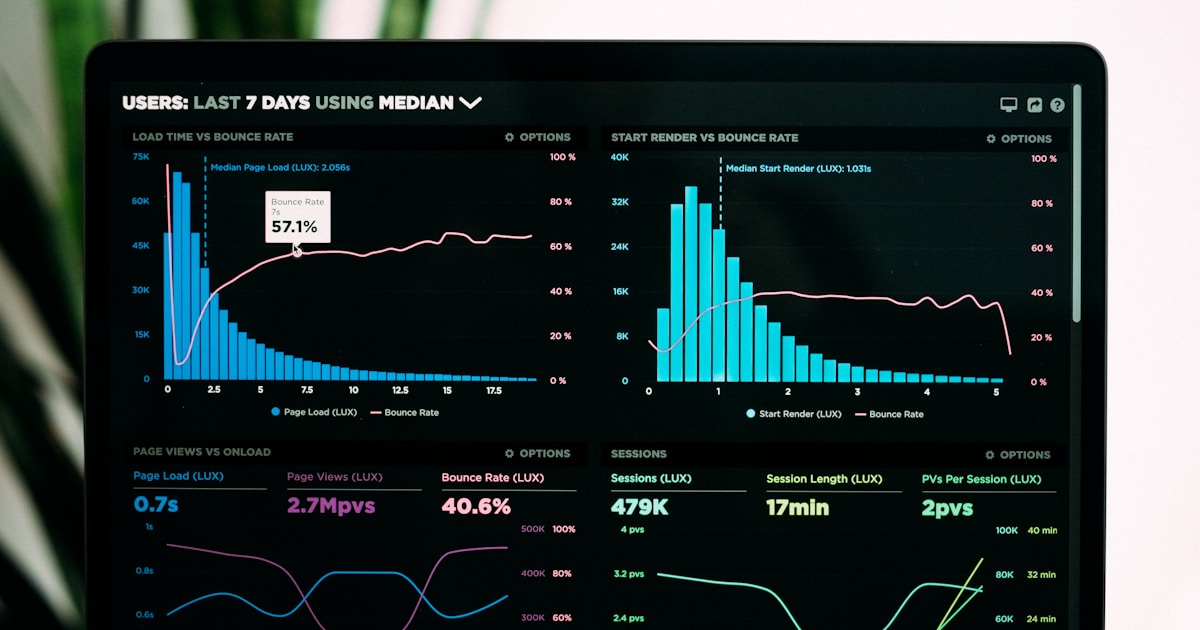
As your agents across the county or country submit results, Votrack's dashboard aggregates them in real time. Campaign managers see:
- Station-level results: Every individual station's numbers as reported by your agent
- Ward totals: Aggregated results across all stations in a ward
- Constituency totals: Rolling constituency-wide tallies
- County totals: The big picture at county level
- National totals: For presidential campaigns, the nationwide aggregate
You do not need to wait for the IEBC to announce results. You are building your own parallel count in real time, station by station.
The Channel Comparison: Which One Should Your Agent Use?
The short answer: it depends on the station's connectivity. Here is the detailed comparison:
| Feature | Web Dashboard | USSD | Telegram |
|---|---|---|---|
| Phone Required | Smartphone | Any phone | Smartphone |
| Internet Required | 3G/4G/Wi-Fi | 2G (voice network) | Data/Wi-Fi |
| Time to Submit (6 positions) | 3-5 minutes | 5-8 minutes | 4-6 minutes |
| Photo Upload | Yes | No | Yes |
| Error Correction | Edit before submit | Re-enter | Re-type |
| Best For | Urban stations | Remote stations | Semi-urban areas |
| Works Without Internet | No | Yes | No |
The critical insight: USSD is the only channel that works without internet. For the 3,032 stations that had zero internet coverage in 2017, and the many more that will have patchy or unreliable connections in 2027, USSD is the lifeline. Any agent with a basic phone and 2G signal can submit results.
Common Mistakes and How to Avoid Them
Based on our experience with past elections, here are the most common agent mistakes and how Votrack helps prevent them:
Wrong station. An agent submits results for the wrong polling station. Votrack prevents this by pre-assigning agents to stations. On the web dashboard, the agent's station is pre-selected. On USSD and Telegram, the system knows which station the agent is assigned to.
Transposed digits. An agent writes 1,532 instead of 1,352. Votrack's validation checks totals against the number of registered voters at that station. If the total exceeds registered voters, the system flags it.
Missing positions. An agent submits presidential results but forgets the governor or senator race. Votrack's submission flow walks through all six positions and shows which ones are still pending.
Delayed submission. An agent writes down results but does not submit them until hours later. The dashboard shows submission times, so campaign managers can identify agents who have not yet reported and follow up.
Why This Matters for 2027
The 2027 election will be contested at every level. With Raila Odinga's passing reshaping Nyanza politics and Gachagua's impeachment fragmenting Mt. Kenya, traditional strongholds are no longer guaranteed. Races that were previously foregone conclusions — gubernatorial, senatorial, parliamentary — will suddenly be competitive.
For candidates at every level, from presidential to MCA, having agents who know exactly what to do on election day is not optional. It is the difference between protecting your mandate and discovering three days later that your numbers do not match the official tally.
Votrack makes that process systematic, verifiable, and — most importantly — executable at the scale of Kenyan elections: 46,229 stations, 6 positions, 47 counties.
Train your agents now. Not on election eve.
Votrack includes agent training modules, station assignment tools, and test-mode simulations so your team is ready before the first ballot drops.
The Bottom Line
Your agent is the most important person in your campaign on election day. They are your eyes and ears at the polling station. They are your source of truth. Give them the right tools and they will give you the data you need to protect your votes.
Votrack gives them three ways to report: web for connected stations, USSD for remote ones, Telegram for everything in between. All results flow into one dashboard. All evidence is timestamped, verified, and court-ready.
The count is everything. Make sure you have your own.
Ready to deploy? Votrack handles agent management, station assignment, multi-channel reporting, and real-time aggregation for all 46,229 polling stations. Request a demo to start building your 2027 election infrastructure.
What This Pattern Means for 2027
Historical election numbers are most useful when they are turned into field actions. For The Agent's Guide: How Parallel Vote Tallying Works at the Polling Station, your campaign can use this history to decide where to invest agents, transport, and voter mobilisation before election day.
- Set target turnout by ward: Use past turnout as your baseline, then assign a realistic uplift target for each ward and polling centre.
- Track strongholds hour by hour: If turnout in your core areas is below plan by midday, deploy rapid mobilisation teams early, not late.
- Protect evidence quality: Keep a clean chain of results forms, incident notes, and station-level logs to support legal review if needed.
For primary reference material, review the IEBC official resources, Kenya Law election jurisprudence, and the IEBC election regulations.
CTA: Votrack gives your team real-time visibility from polling station to county tally, with Web, USSD, and Telegram reporting in one workflow. Book a Votrack demo.
Share this article
Need Real-Time Election Tracking?
Votrack provides secure, parallel vote tallying for every electoral position in Kenya.
Learn More About Votrack