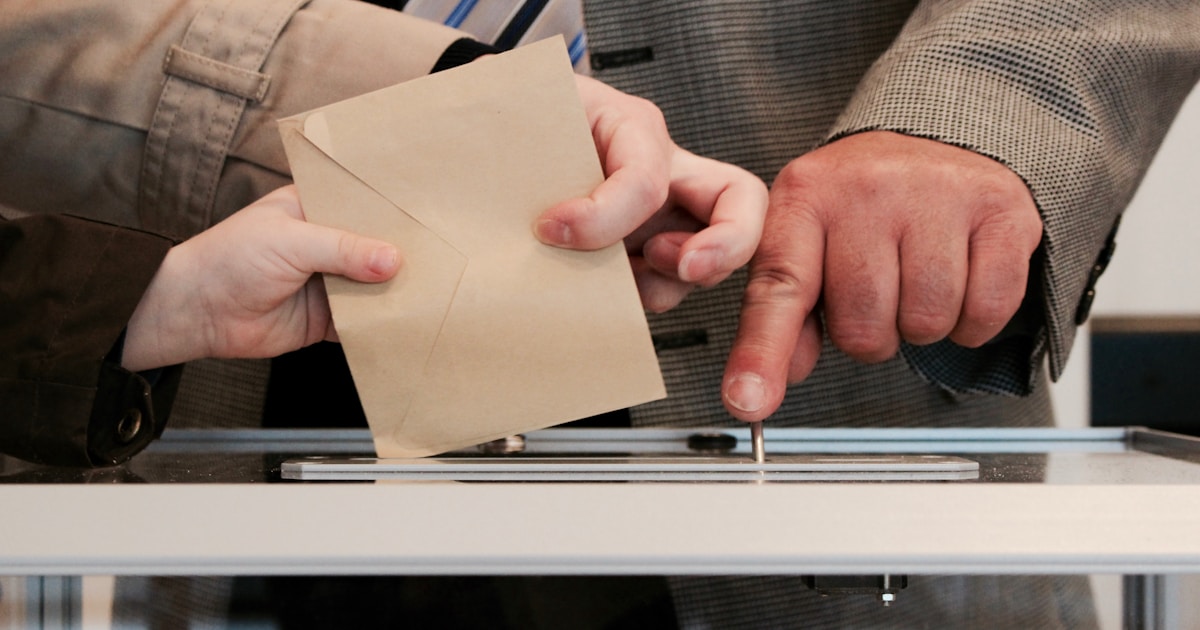
Voter registration doubled in 15 years. But turnout collapsed. Why?
Here is a fact that should make every Kenyan pause. In 2013, the IEBC registered 14.4 million voters and 86% of them showed up on election day. By 2022, there were 22.1 million registered voters, but only 65% bothered to come. Kenya added nearly 8 million voters to the roll. And somehow, enthusiasm went the opposite direction.
Let us walk through four elections to understand how we got here.
The Numbers at a Glance
Kenya has held general elections in 2007, 2013, 2017, and 2022. Each one told a different story about our democracy. But the trend line across all four tells the real story: more voters, fewer showing up.
In 2007, about 9.8 million Kenyans were registered to vote. By 2013, after the new constitution and the creation of 47 counties, that number jumped to 14,388,781. The 2017 cycle pushed it to 19,611,423, and by August 2022, Kenya had 22,120,458 registered voters.
That is a 126% increase in registered voters over 15 years. Kenya's electoral infrastructure grew massively. The IEBC opened thousands of new registration centres, introduced biometric technology, and expanded diaspora voting from zero to 10,443 registered voters abroad by 2022.
But here is what happened to turnout: 86% in 2013, roughly 78% in 2017, and just 65% in 2022. The more Kenyans we registered, the fewer actually voted.
2007: The Election That Almost Broke Kenya
The 2007 election between Mwai Kibaki and Raila Odinga was the election that changed everything. With about 9.8 million registered voters, turnout was high. But the aftermath — disputed results, post-election violence that killed over 1,000 people and displaced 600,000 — scarred the nation.
That trauma led directly to the 2010 constitution, which created the devolved system of government, the IEBC, and the requirement that a president must win 50%+1 of votes plus 25% in at least 24 of 47 counties.
2013: The First Test of the New System
The 2013 election was the first under the new constitution. Uhuru Kenyatta won with 6,173,433 votes (50.07%), barely crossing the 50%+1 threshold. Raila Odinga got 5,340,546 votes (43.28%). Out of 14,388,781 registered voters, 12,330,028 actually voted — an 86% turnout.
Why was turnout so high? Several reasons. It was the first election under devolution, so county-level races were new and exciting. The memory of 2007 violence motivated both sides. And ethnic mobilisation was at a peak — Central Province recorded 92% turnout, Nyanza hit 89%, and Rift Valley managed 88%.
Only 8 presidential candidates ran in 2013. The field was manageable and voters understood their choices clearly.
2017: Two Elections, One Year
By 2017, the voter register had grown to 19,611,423 — a 36% increase from 2013. Turnout dropped to about 78%. Kenyatta won the August election with 8,203,290 votes (54.27%) against Odinga's 6,762,224 (44.74%). Again, 8 candidates were on the ballot.
Then the Supreme Court nullified the result — a first in African history. The fresh election in October 2017 saw Odinga boycott and Kenyatta win with 98.26% of a dramatically reduced vote.
The 2017 cycle introduced something toxic to Kenyan democracy: the idea that your vote might not count. If the Supreme Court can throw out an election, why bother voting?
2022: The Turnout Crash
The 2022 election saw the register grow further to 22,120,458. William Ruto won with 7,176,141 votes (50.49%), narrowly edging Odinga's 6,942,930 (48.85%). Only 4 candidates ran — the fewest in recent history.
But the turnout story was devastating. Nationally, about 14,213,137 valid votes were cast plus 113,614 rejected ballots. That is roughly 65% turnout. Nearly 8 million registered Kenyans stayed home.
The gap between registered voters and actual votes cast widened dramatically. In 2013, about 2 million registered voters did not vote. By 2022, that number was closer to 8 million. Mombasa's turnout crashed to 43.76%. Even Nairobi managed only 55.96% despite having the largest register at 2,416,551 voters.
What Changed Between Elections?
Several things drove the turnout decline:
- Youth disillusionment: Young voters registered in record numbers but many did not show up. By 2017, 51% of registered voters were under 35.
- Urban apathy: Nairobi's turnout dropped from 81% in 2013 to 72% in 2017 to 56% in 2022. Urban voters have alternatives to politics for expressing their frustrations.
- Register bloat: The IEBC registered millions of voters who may have moved, died, or simply lost interest. A bigger register with the same number of active voters means lower turnout.
- Election fatigue: After the double elections of 2017 and the disputed outcomes, many Kenyans decided their vote did not matter.
The IEBC's post-election reports acknowledge these challenges, but solutions have been slow to come.
What This Means for 2027
Here is the question facing Kenya's democracy: if the current trend continues, 2027 could see turnout drop below 60%. That means a president could be elected by fewer than 40% of registered voters. Is that legitimate?
The parties that win in 2027 will be the ones that figure out how to reverse this trend. Voter mobilisation, not just registration, will be the battleground. The data from the turnout decline should be a wake-up call for every political party in Kenya.
For a deeper look at where strongholds shape presidential outcomes, read our analysis of presidential strongholds across elections. And for the story of how the voter register itself grew, check out where Kenya added 8 million voters.
Key Takeaways
- Registration doubled from 9.8M to 22.1M — Kenya's electoral infrastructure grew massively between 2007 and 2022
- Turnout dropped from 86% to 65% — a 21-percentage-point decline over three election cycles
- The gap between registered and actual voters grew from 2M to 8M — register bloat is a real problem
- Urban counties led the decline — Mombasa at 43.76% and Nairobi at 55.96% in 2022 show deep disengagement
Data beats guesswork in elections. Votrack gives political teams real-time access to voter registration data, turnout patterns, and cross-election comparisons at every level from county to polling station. Request a demo to prepare for 2027.
Share this article
Need Real-Time Election Tracking?
Votrack provides secure, parallel vote tallying for every electoral position in Kenya.
Learn More About Votrack